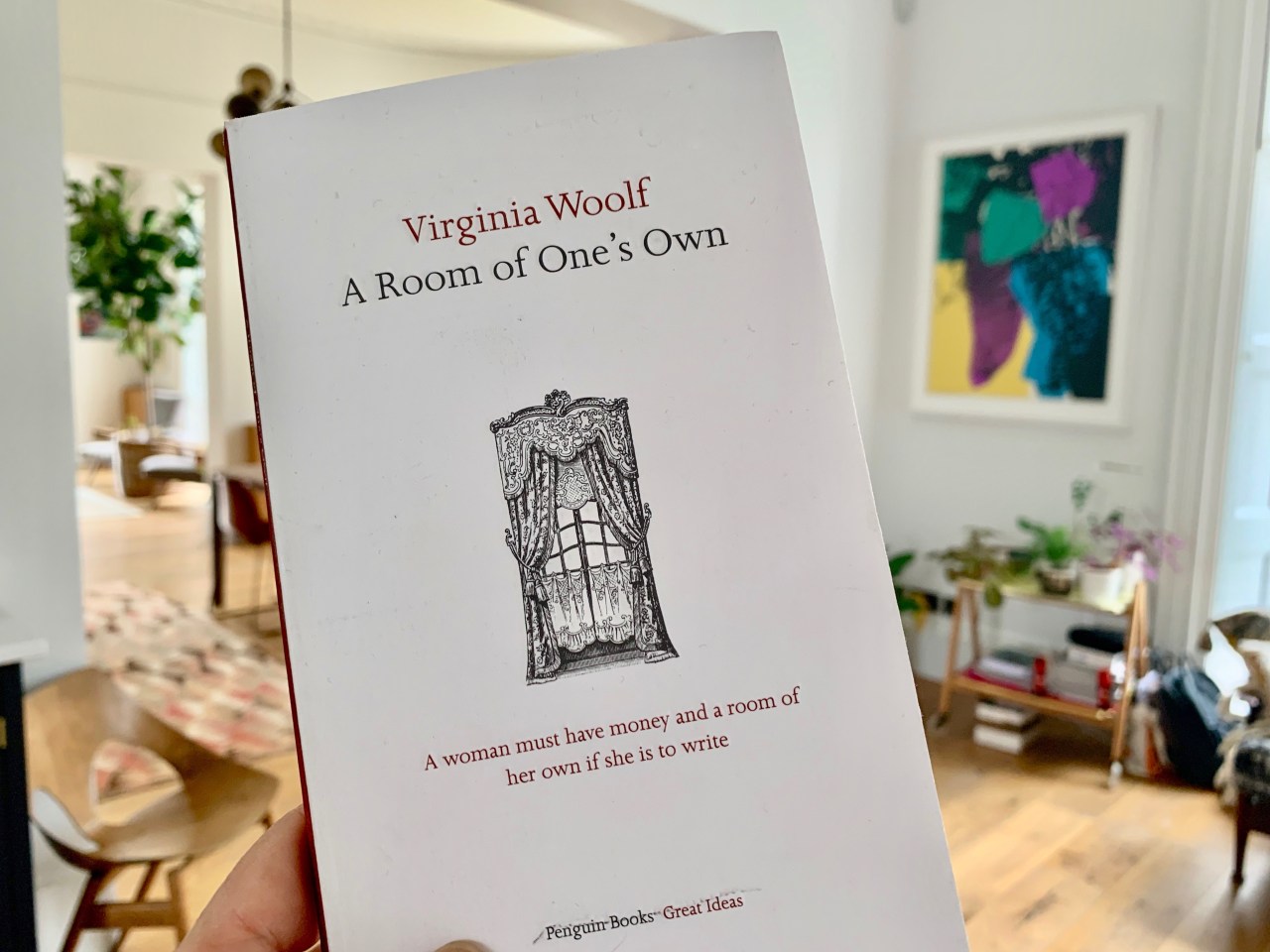
‘A room of one’s own’ by Virginia Woolf

Yup another one of hers. Just as famous so I’m not going to discuss it in too much details because, heck, it’s early and I haven’t had any breakfast which means the brain is not quite in gear… and so many words have been written about it I couldn’t possibly add anything meaningful.

I will however say that it was all I expected to be. In a good way. Maybe more.

Let’s consider it was written in 1928, originally it based on a couple of speeches she gave to two women colleges in Cambridge. 1928. The same year that in England women finally got the vote on equal terms with men. Still though… things weren’t exactly equal.

In this little book, barely over 100 pages, Woolf fiercely argues for the necessity of women to have a room to call their own and £500 a year in order to be able to write… which is to say that she fiercely argues for a metaphorical space for women in the world of literature dominated by men and most of all for financial independence.

All those years ago she wrote:

… you will agree that the excuse of lack of opportunity. training, encouragement, leisure and money no longer holds good.

She is so ahead of her time… How would she react if she knew that 90 years later women, while able to be financial independent, are still earning less than men and are still fighting for equality?

I think she’d be a little cross and she’d be given us all a metaphorical kick in the rear and encourage us, push us to do more…

At the very least she’d think us lazy. I daren’t think what else.

So if, like me, you’ve started the day with a semi-argument with your husband over his ‘inability’ to fill in a pay-in slip and could I please do it – you don’t want to know the details and my eloquent ‘chosen’ words – talking about this book has a certain irony.

Have a good day.

Some fab quotes:

“Women have served all these centuries as looking glasses possessing the magic and delicious power of reflecting the figure of man at twice its natural size.” 

“Suppose, for instance, that men were only represented in literature as the lovers of women, and were never the friends of men, soldiers, thinkers, dreamers; how few parts in the plays of Shakespeare could be allotted to them; how literature would suffer! We might perhaps have most of Othello; and a good deal of Antony; but no Caesar, no Brutus, no Hamlet, no Lear, no Jaques–literature would be incredibly impoverished, as indeed literature is impoverished beyond our counting by the doors that have been shut upon women.” 

“The history of men’s opposition to women’s emancipation is more interesting perhaps than the story of that emancipation itself.” 
Husband: out visiting his mum

No 1: upstairs, revising for his exams

No 2: out supporting the town hockey team

No 3: on a plane on his way to Cyprus kindly invited by a friend.

Me: at the kitchen table, talking to no one, the dishwasher playing in the background.

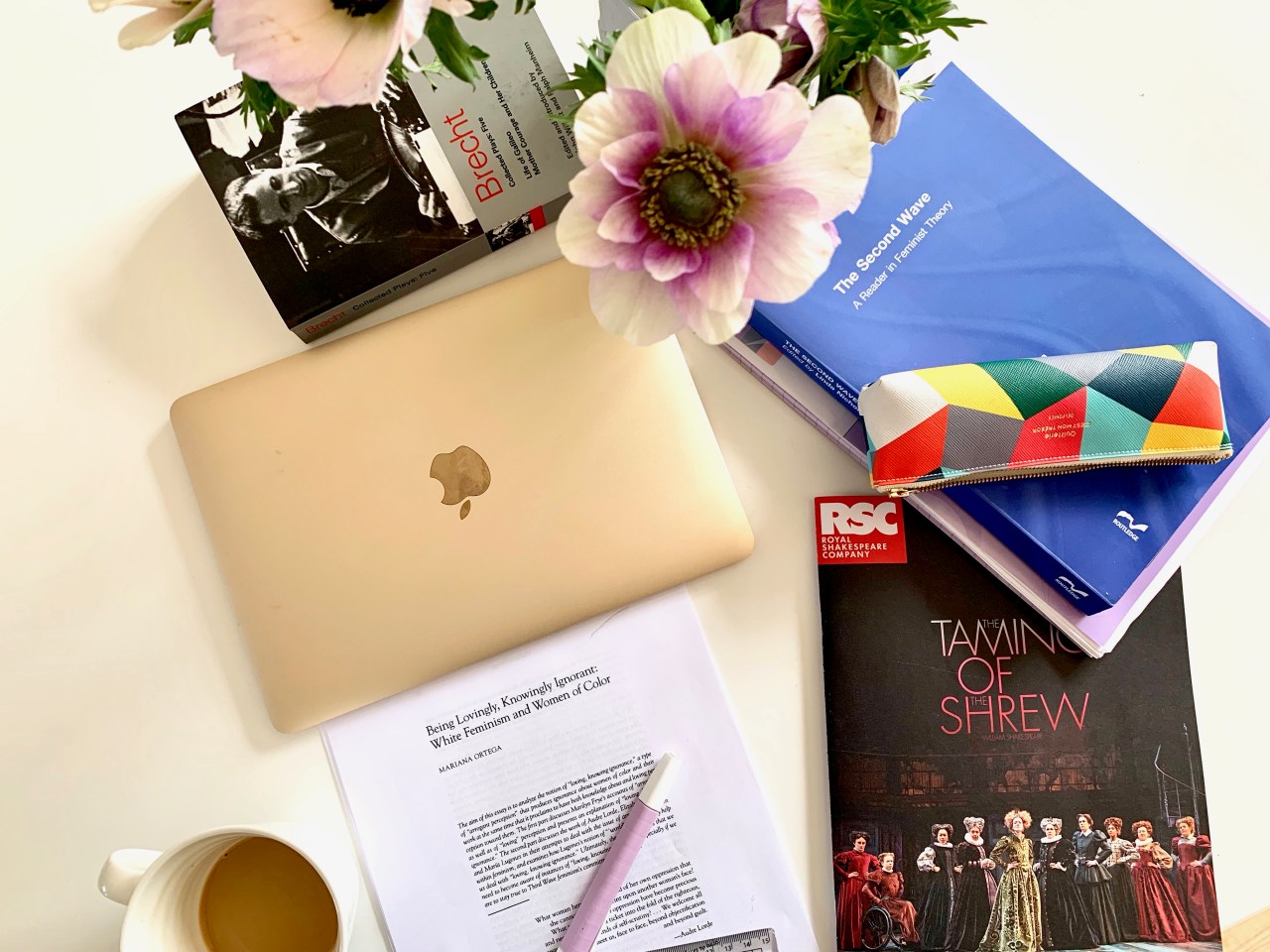
On the table:

  • the program from the RSC production of ‘The Taming of the Shrew’ (W. Shakespeare) I went to see last Wednesday. Really good. It was a modern production (great set and costumes) in which all the roles were reversed. Oh yes… If you’re familiar with the play you’ll know it’s quite ‘traditional’ in its view of the sexes… well seeing it played in this way it feels quite shocking and discordant… and then it makes the original version even more sexist and wrong.
  • cup of tea, re-heated because… life…
  • bunch of anemones, I don’t need a reason for that
  • Bertol Brecht text ‘Life of Galileo’. Oh wow. Homework. Just finished it. Genius.

Such a lot is won when even a single man gets to his feet and says No.

The aim of science is not to open the door to infinite wisdom, but to set a limit to infinite error.

  • An essay I must read next called ‘Being lovingly, knowingly ignorant: white feminism and women of colour’ (Mariana Ortega). I’ll report back on this one.
  • And a lilac highlighter. Keeping up with the trend.
  • Pencil case, a gift of Mr M.
  • Book on ‘The second wave’. Feminism. Not surfing. (Although to be fair I know about the same on both subjects, ie not much)
  • Lovely pad of lilac note paper

The sun is shining, the dog is sleeping, my legs are deliciously tired after my (short) run this morning.

Life is good.

Last night I couldn’t sleep.

Earlier there had been some sort of disturbance in front of our house, maybe ‘kids’ (big kids) just messing about, maybe not, there was a football, yes, but there was a lot of shouting and it was late and it was dark, not the time to be out there. And so, we had called the police; no doubt an overreaction, no doubt laziness, why not just go out and ask them to be quiet, I don’t know. It was late, we were tired. Unfamiliar with the situation. Such is the cosseted life we live.

That is a different issue though, not the reason I couldn’t sleep. The reason I couldn’t sleep, the reason I was left with a bad taste in my mouth was that I kept hearing the first question the police asked: “Are they black or white?”.

Not… “what do they look like?” but “are they black or white?”

Black white black white black white black white black white black black black..

Why?

But we all know why, don’t we?

How about asking, what are they doing, what are they wearing, where, are they damaging property, how, how long have they been there… there are so many other questions that should have been more relevant and instead she (SHE) asked that one. So laden with meaning and assumptions and prejudice. And also, if you knew where I live… totally ridiculous… and more wrong because of it…

I’ve been doing a lot of reading about race at the moment and I realised that perhaps a few months ago I wouldn’t even have noticed the weight carried that question. I would have probably answered without thinking.

So I stared at the dark for ages. A little bit angry, a little bit ashamed.

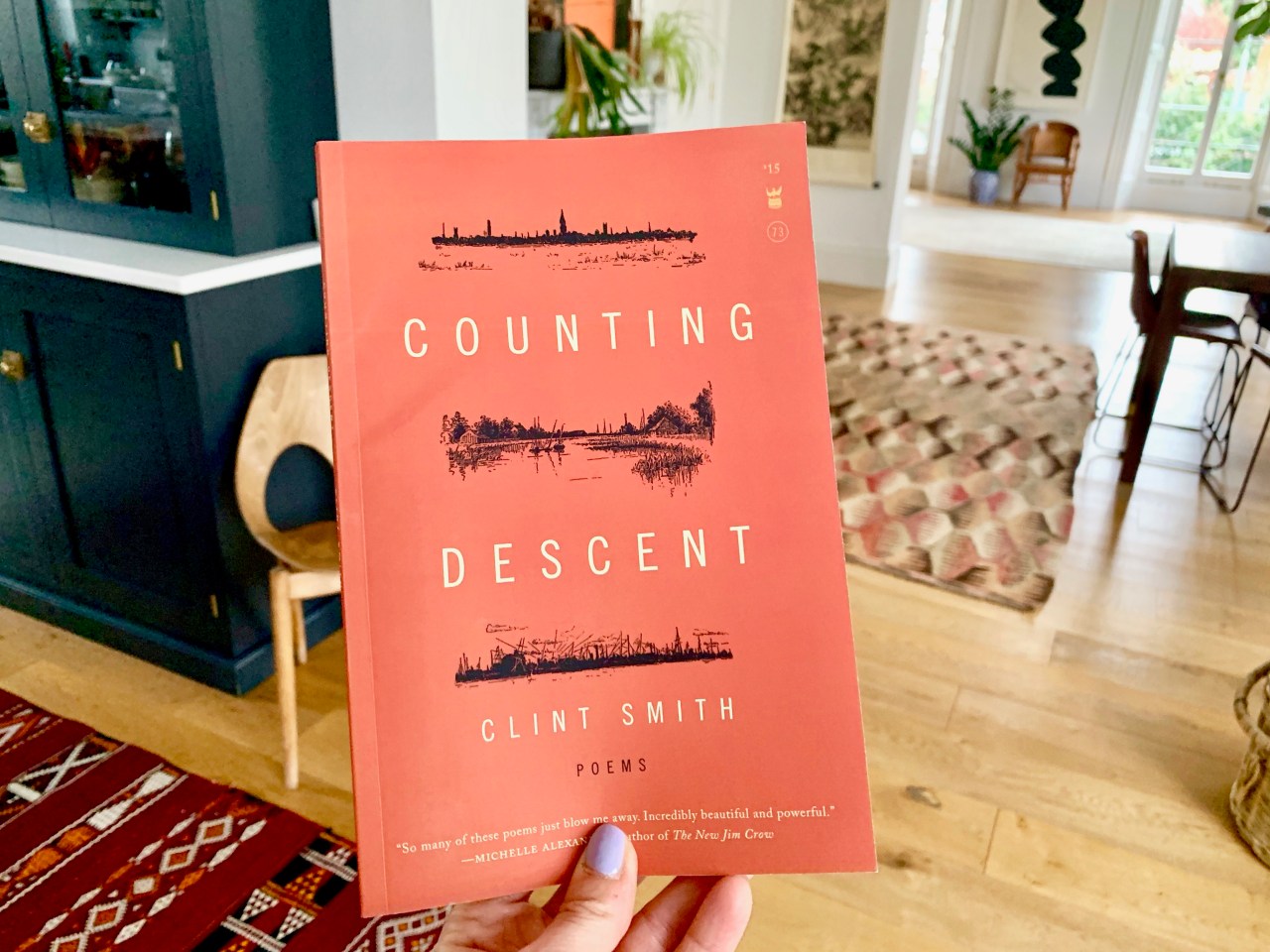
What the window said to the black boy (By Clint Smith)

when someone breaks me they call it a crime

they call it property damage

they call it breaking the social contract

when someone breaks you they call it inevitable

they call it your fault

they call it Wednesday

they say that it’s you that came cracked

came shattered right out of the box

but they don’t know this is just something you do

to show how many of you there are

that none of you are the same

that the more shards there are

the more ways there are

to refract this light

that envelops us each day

Also… they were white.


For the first time in ages, and I mean… months, yesterday we had a free Saturday; no sport commitment, no school events, no family duties. Nothing.

And the sun was shining.

I promised you it felt like we were on holiday!

‘The big boys’ were on a hockey tournament miles and miles away, Mr took No 3 to ‘look at cars’ and I grabbed my parents and our National Trust memberships and went exploring.

(mum and dad, say hi!)

I haven’t taken advantage of my membership enough, and I’m determined to change that this year… there are so many amazing places to visit near us that is a real shame to leave them undiscovered.

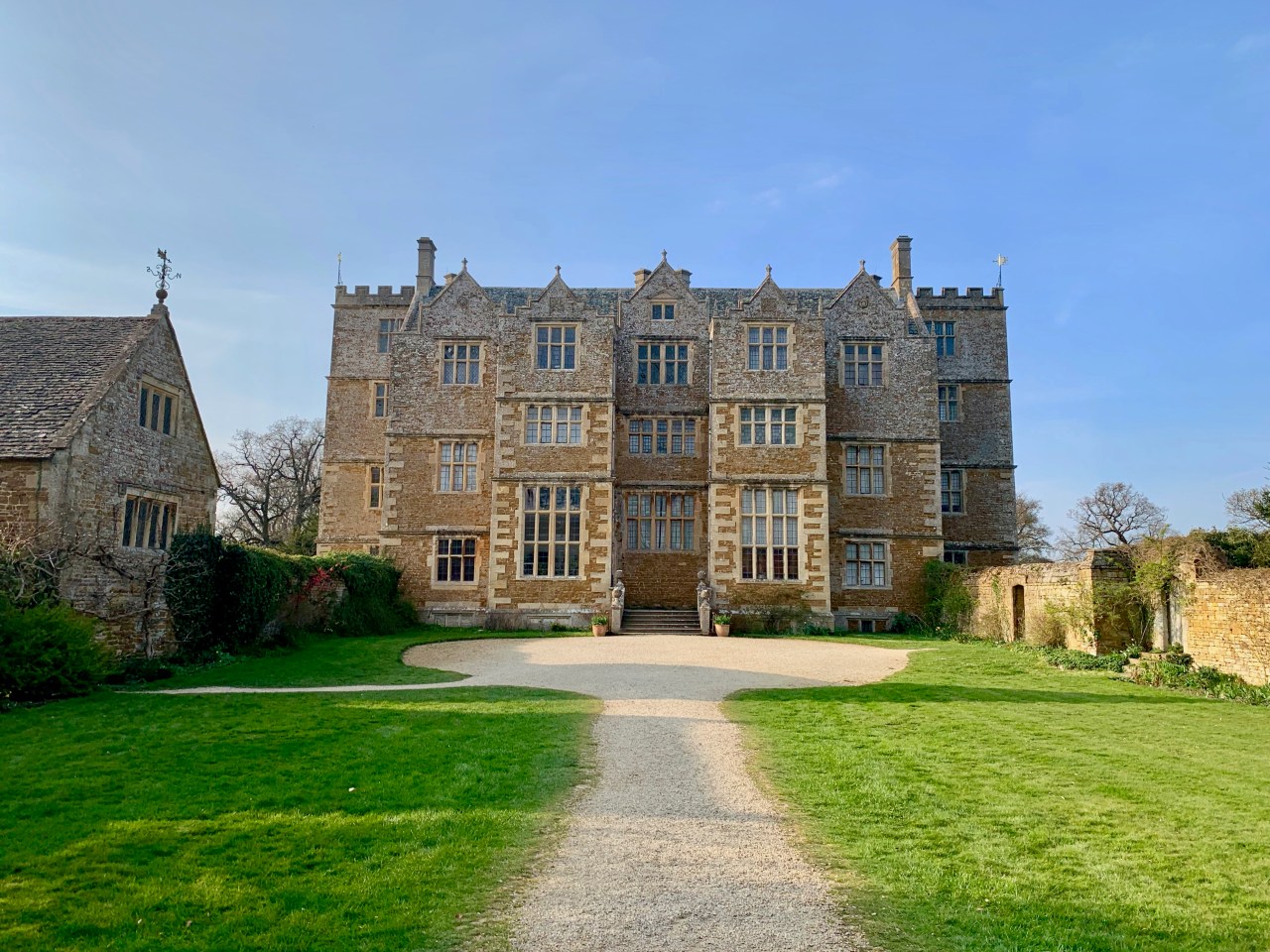
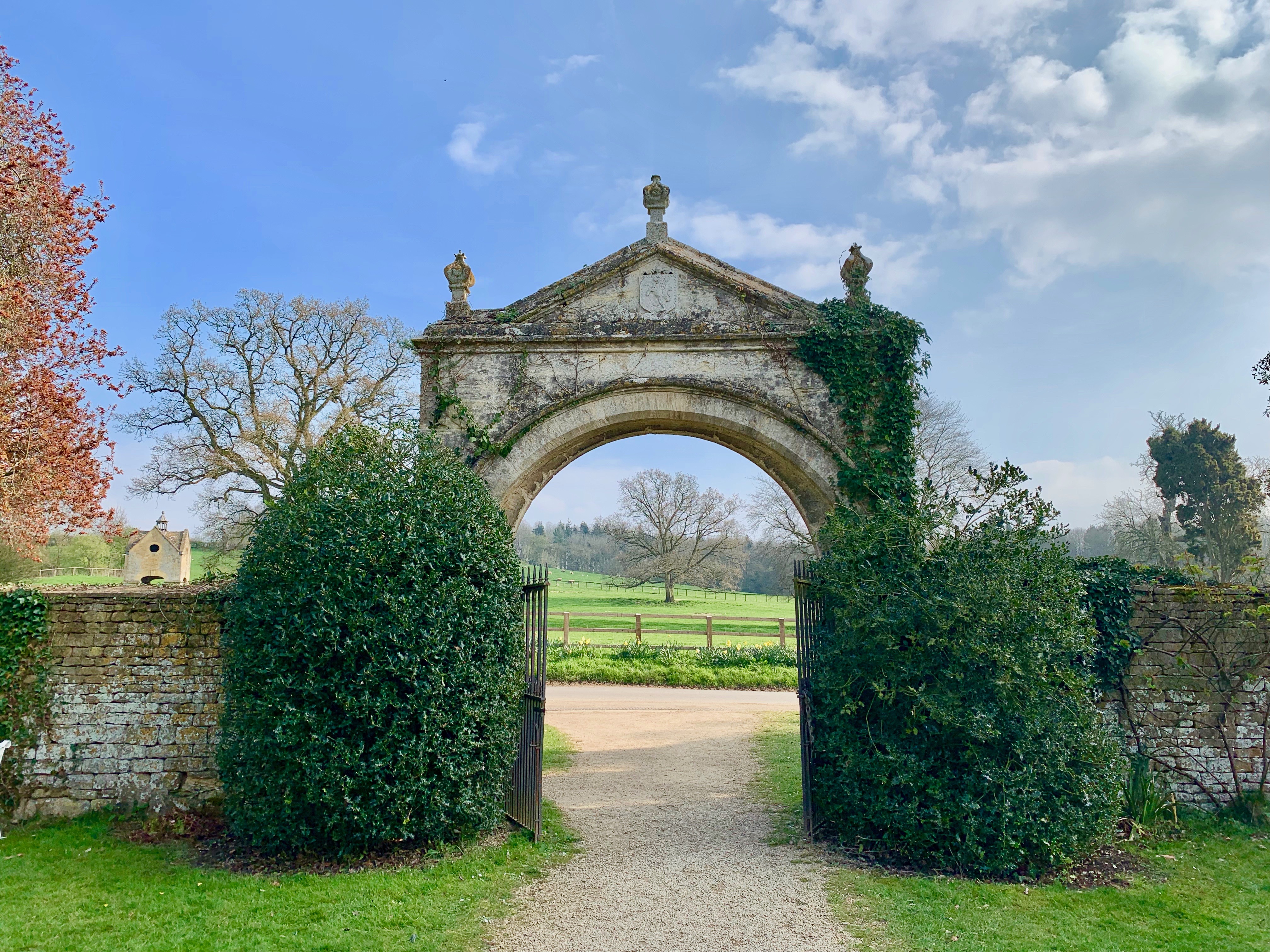
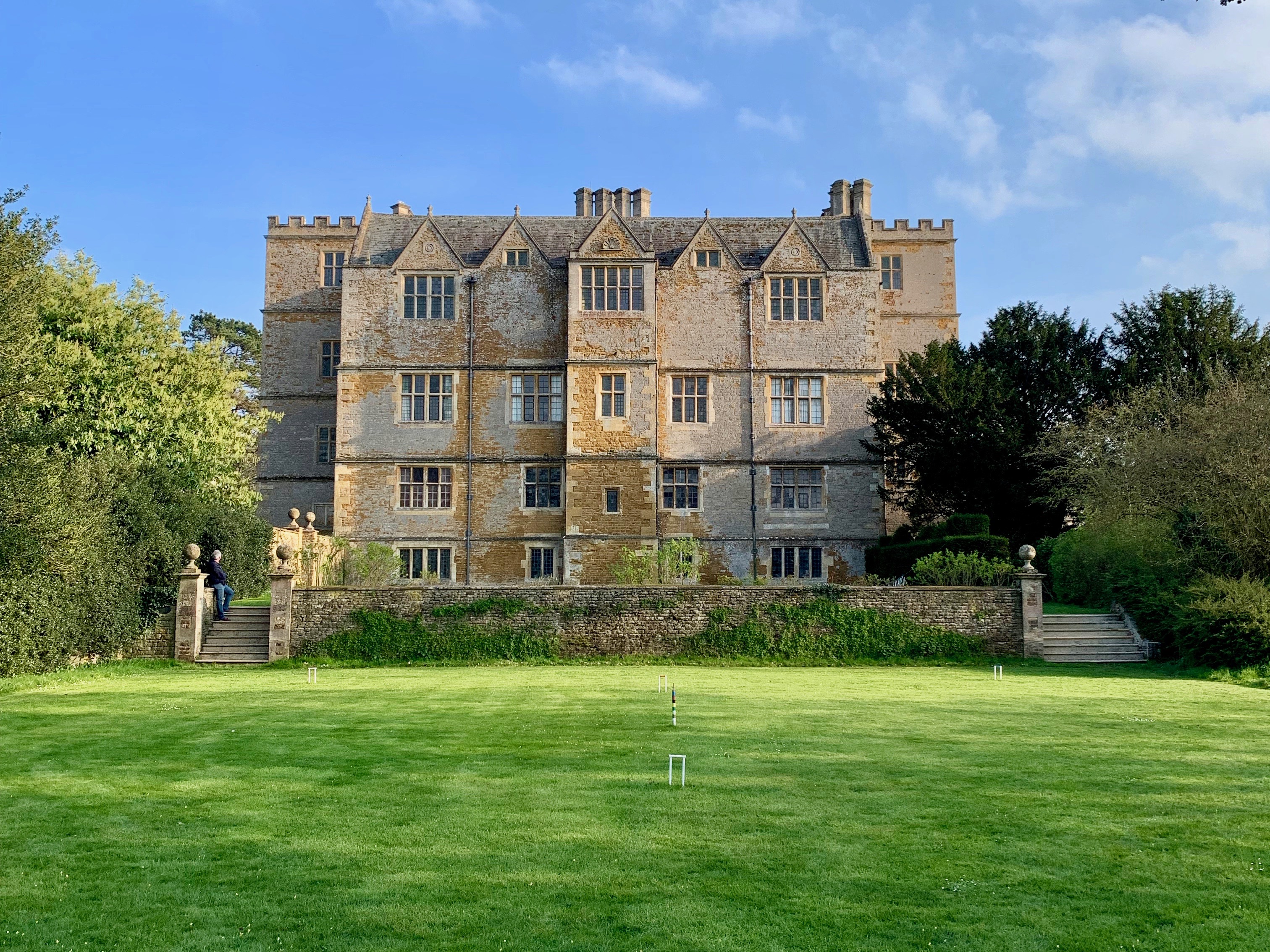
Take Chastleton House for example… it’s fabulous. Truly fabulous… and until yesterday I didn’t even know it existed. Sigh. Shame on me.

The early history of the house is interesting: Walter Jones was the first owner of Chastleton House. The land and the previous house that stood here had been owned by Robert Catesby, leader of the Gunpowder Plot. Walter’s family, originally from Wales, had been in the wool trade, but Walter trained as a lawyer, served as a Town Clerk in Worcester and as a Member of Parliament. He was married to Elinor Pope, the daughter of a Flemish immigrant, who had served as a maid to Elizabeth I. Being a landowner was a first step on the social climbing ladder. In 1609, his son Henry married Anne Fettiplace, the daughter of a member of the local gentry. This marriage was another step in the advancement of the Jones family by developing connections to more established families. His son Arthur was a Royalist and had fought at the Battle of Worcester in 1651. The loss of this battle marked the end of the Civil War, leaving families like the Jones’ on the losing side and subject to heavy fines. This period marked the downturn in the family’s finances as they had supported the ‘wrong’ side in the Civil War and were subject to many fines because of it. The latter part of the 17th and early part of the 18th century saw a series of Chastleton owners who died young, made some structural improvements to the building and in one case ended up in jail.

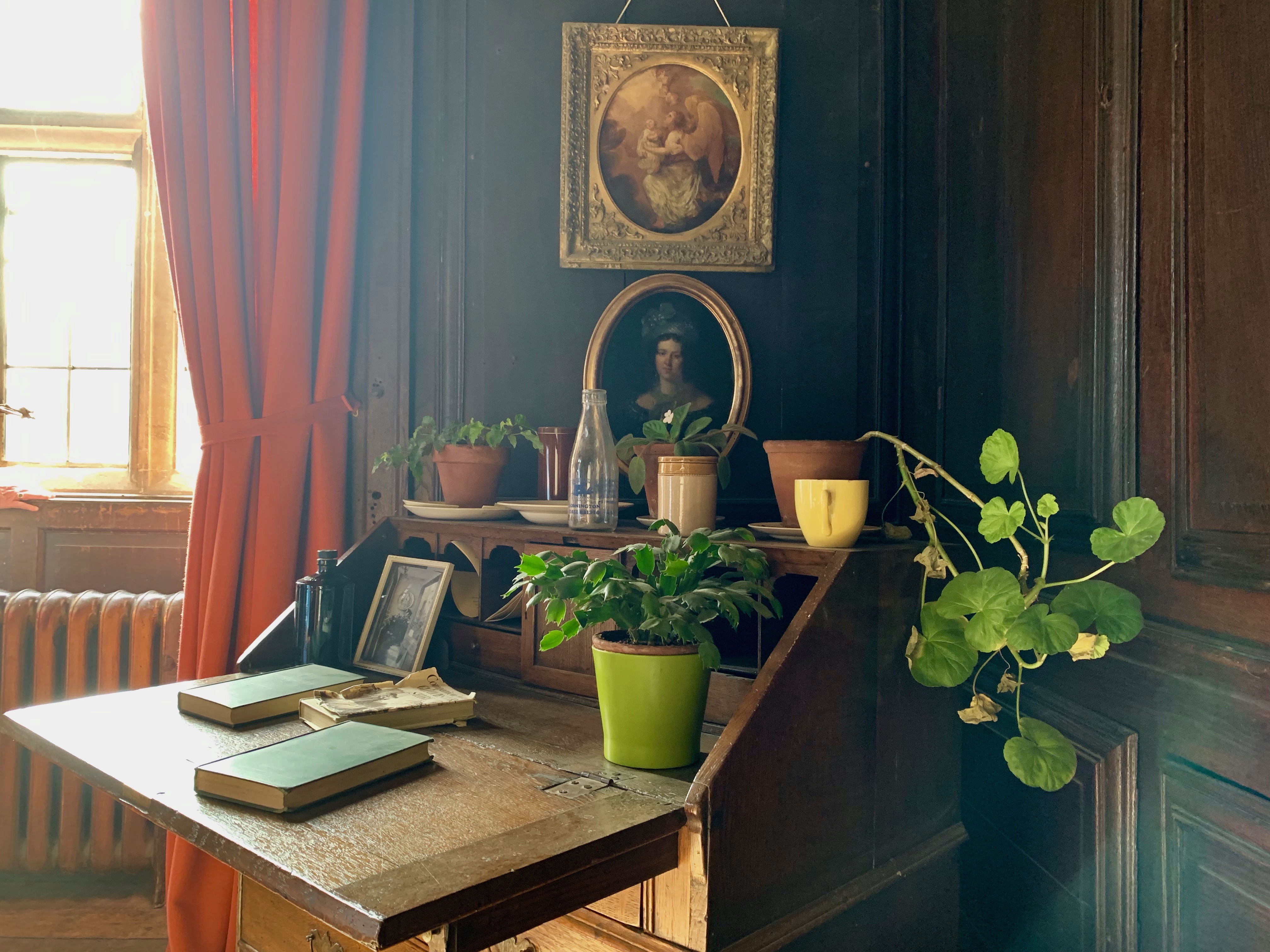
Even though the house had been open to the public since 1936 to help with its upkeep this wasn’t enough and in 1991 was acquired by The National Trust, with the aim to keep the unique feel of Chastleton and preserve the romantic air of decline that enveloped the site, and they really succeeded. Walking through it is like stepping back in time.

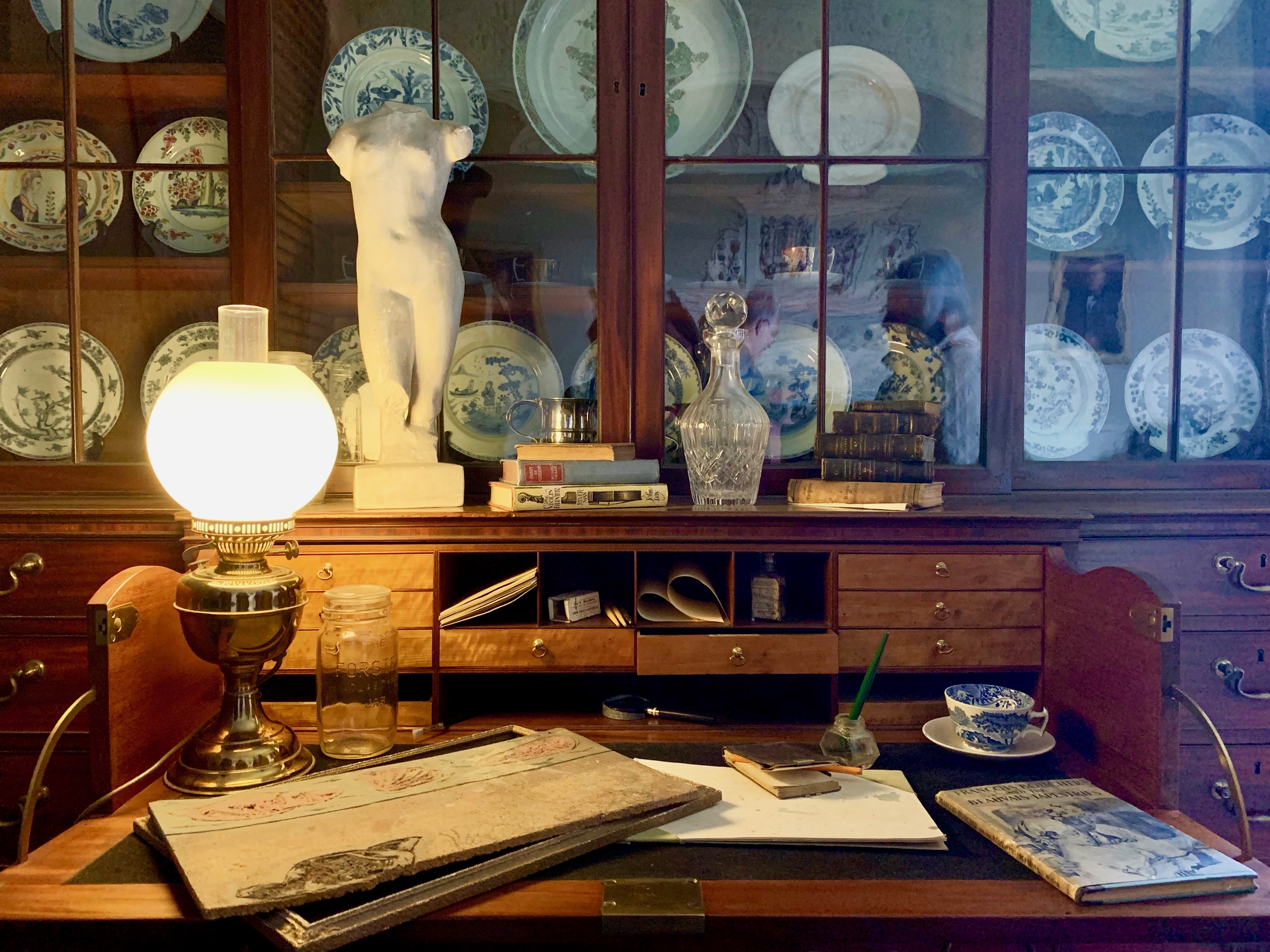
The most used rooms are a lovely mix of ‘really old’ and 1950s charm

‘his’ study
‘her’ parlour
original tapestries and solitaire card games
desks and books everywhere

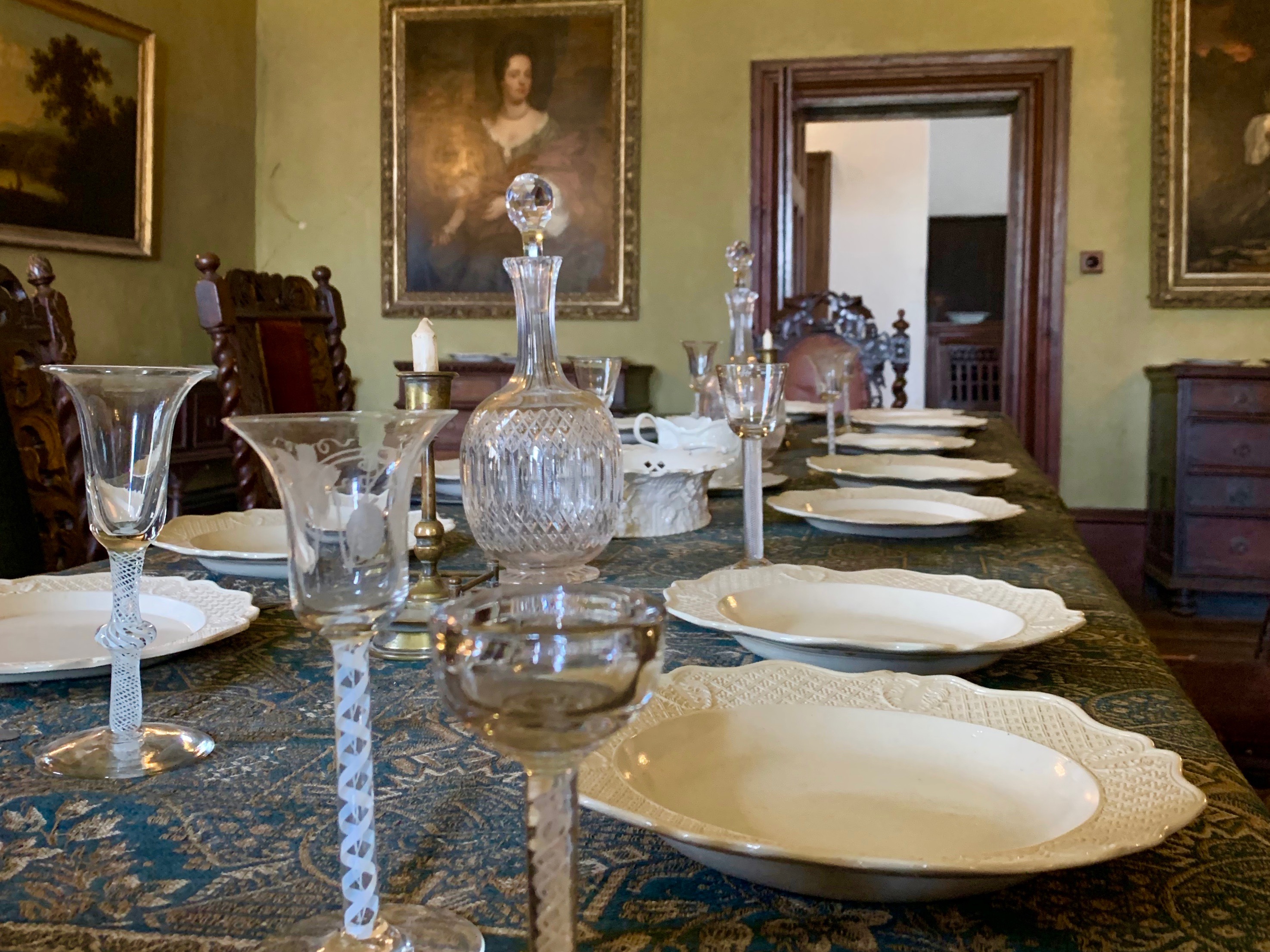
The Great Hall has the original 18ft long table

original crockery and glassware from the 1700

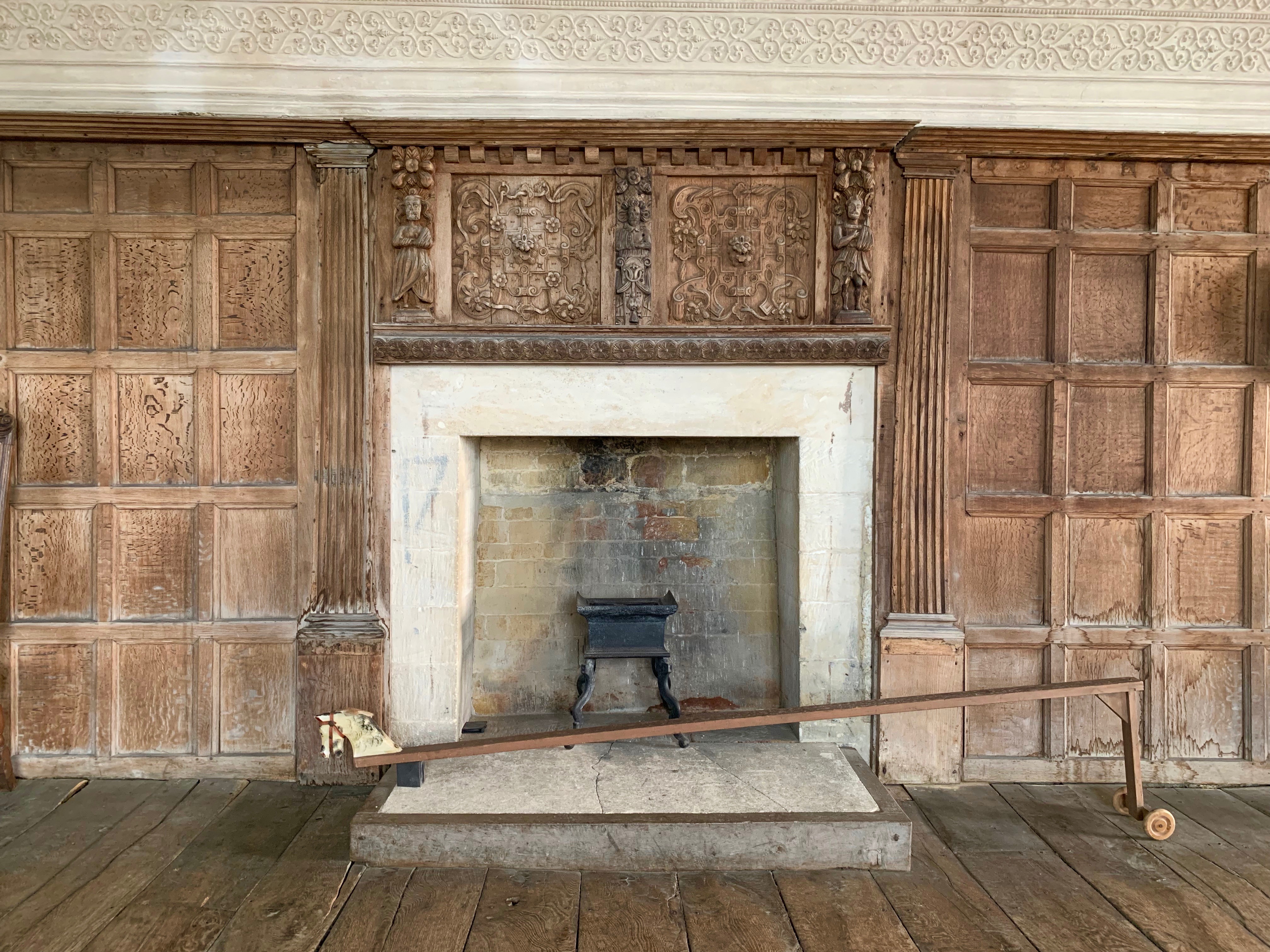
I wish I’d taken more photos of the ceilings… so intricate and detailed… you can kind of see what I mean a little in this photo of the Great Gallery at the top of the house

how cute is that toy horse?

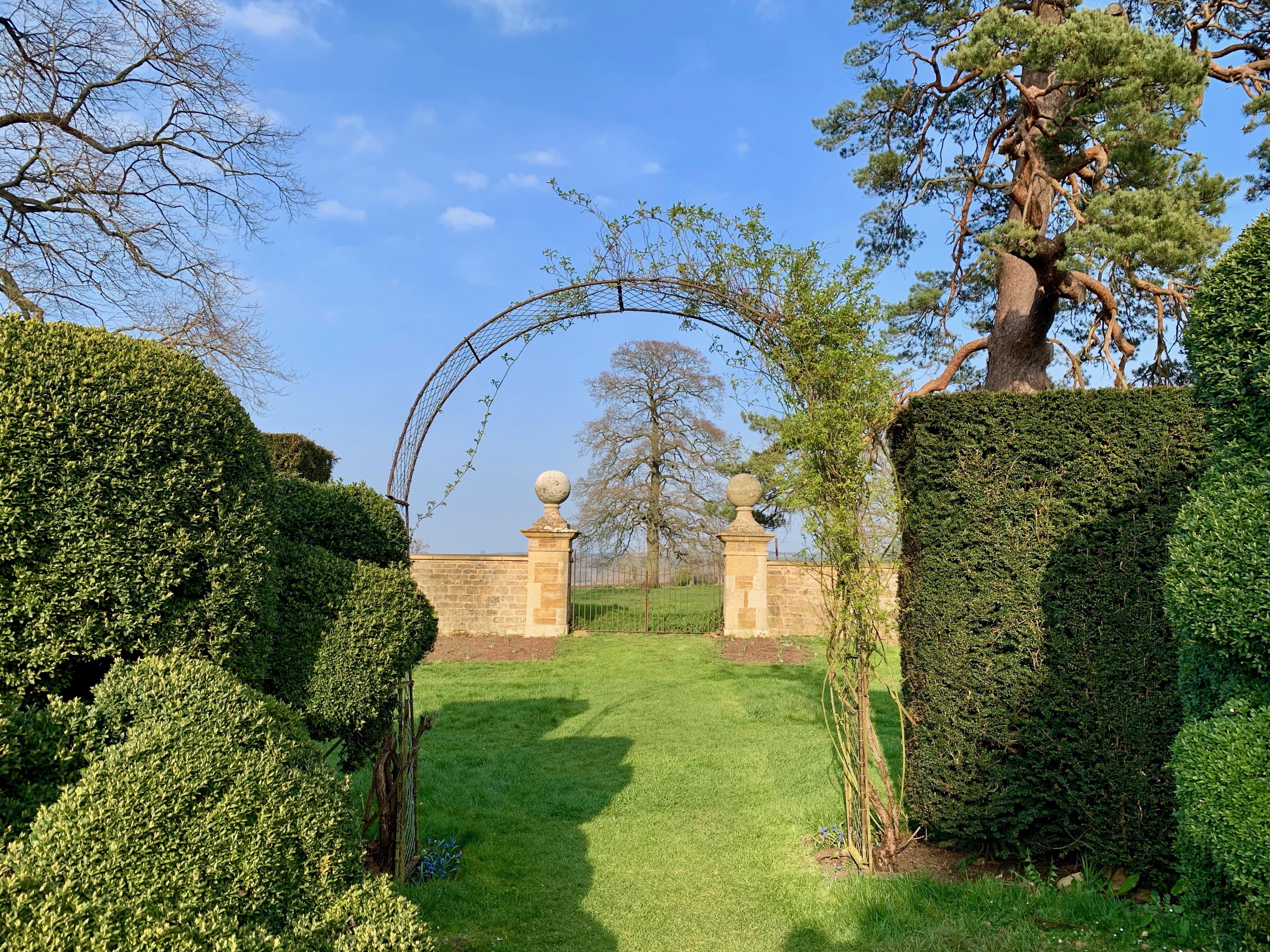
The garden and grounds are gorgeous… and so is the location, deep in the Oxfordshire countryside

History says that on this lawn the rules of Croquet were set out and codified by Walter Jones in 1866.

If you’re looking for a lovely afternoon out, do go, it’s one of the most charming place I’ve seen for a long time.

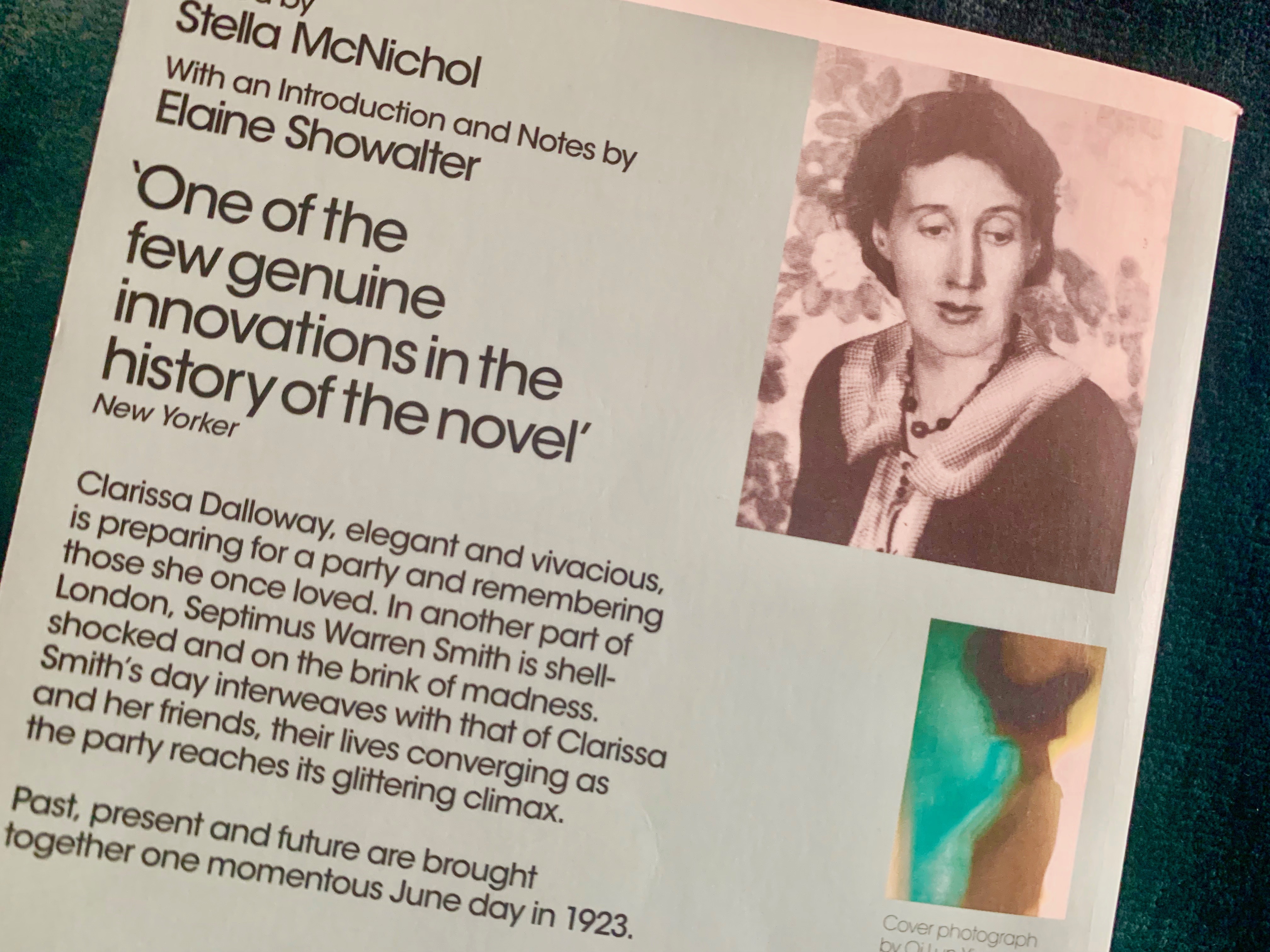
Mrs Dalloway by (Virginia Woolf)

So this was my choice… not to show off how highbrow I am – because I’m so not! – but because I’ve always wanted to read it and it’s so easy to look at new books when choosing and ignore all the big great ones of the past.

Not an easy read. I think the way of writing has changed so much since Woolf’s days that it took me a while to get into the groove; what a book though… amazing.

The story is simple, a day in the life of Clarissa Dalloway, she’s getting ready for a party in the evening, an old flame comes to town. On a parallel time Septimus Warren Smith is back from the war and is badly suffering from the terrors he lived through.

Let’s face it though, it is so much more than that. It’s about getting old and looking back to one’s life, one’s achievements, or simply at the days slipping by one after the other.

She felt very young; at the same time unspeakably aged”.

Aged, not old… And again she totally ‘got me’ when she writes “

She had the oddest sense of being herself invisible; unseen; unknown; there being no more marrying, no more having of children now, but only this astonishing and rather solemn progress with the rest fo them, …, this being Mrs Dalloway; not even Clarissa any more; this being Mrs Richard Dalloway.

It is also, a love letter to London in June and not by any means least her description and sensitivity towards PTSD is incredible.

Books have been written on this novel so I won’t go on about it, just read it. Let the long sentence flow like thoughts in your head and enjoy. Occasionally one observation will cut through the page and stop you in your track.

She thought there were no Gods; no one was to blame; and so she evolved this atheist’s religion of doing good for the sake of goodness.

All the same, that one day should follow another; Wednesday, Thursday, Friday, Saturday; that one should wake up in the morning; see the sky; walk in the park; meet Hugh Whitbread; then suddenly in came Peter; then these roses; it was enough. After that, how unbelievable death was!-that it must end; and no one in the whole world would know how she had loved it all; how, every instant . ..

I could give you hundreds of quotes… best reading it for yourself.

ADDED: I just found out that Virginia Woolf ended her own life on this very day in 1941. Slightly spooky coincidence. She was such a brilliant, intelligent woman. And then I was on instagram and came across this lovely post by Pigeonpostbooks.

She says – and I quote – Vita (Sackville-West) and Virginia began an affair in the mid-1920s, and rather than dwelling on Virginia’s tragic and untimely death which occurred on this day in 1941, I thought I would focus on the love Vita felt for her. Here are words that Vita wrote to Virginia in 1926.

I am reduced to a thing that wants Virginia. I composed a beautiful letter to you in the sleepless nightmare hours of the night, and it has all gone: I just miss you, in a quite simple desperate human way. You, with all your un-dumb letters, would never write so elementary phrase as that; perhaps you wouldn’t even feel it. And yet I believe you’ll be sensible of a little gap. But you’d clothe it in so exquisite a phrase that it would lose a little of its reality. Whereas with me it is quite stark: I miss you even more than I could have believed; and I was prepared to miss you a good deal. So this letter is just really a squeal of pain. It is incredible how essential to me you have become. I suppose you are accustomed to people saying these things. Damn you, spoilt creature; I shan’t make you love me any the more by giving myself away like this—But oh my dear, I can’t be clever and stand-offish with you: I love you too much for that. Too truly. You have no idea how stand-offish I can be with people I don’t love. I have brought it to a fine art. But you have broken down my defences. And I don’t really resent it …

Sigh…

Truth to be said I don’t have much time for knitting these days. Or sewing. Or much else aside from reading and keeping up with ‘life stuff’… you know, the washing and ironing… the cooking (and teenagers never stop eating!)… the hockey… BUT in a couple of months College will be over for this year and I can get back to my old life. I have plans to re-paint my studio and a couple of sewing patterns are calling my name too. Patience. I need to be patience.

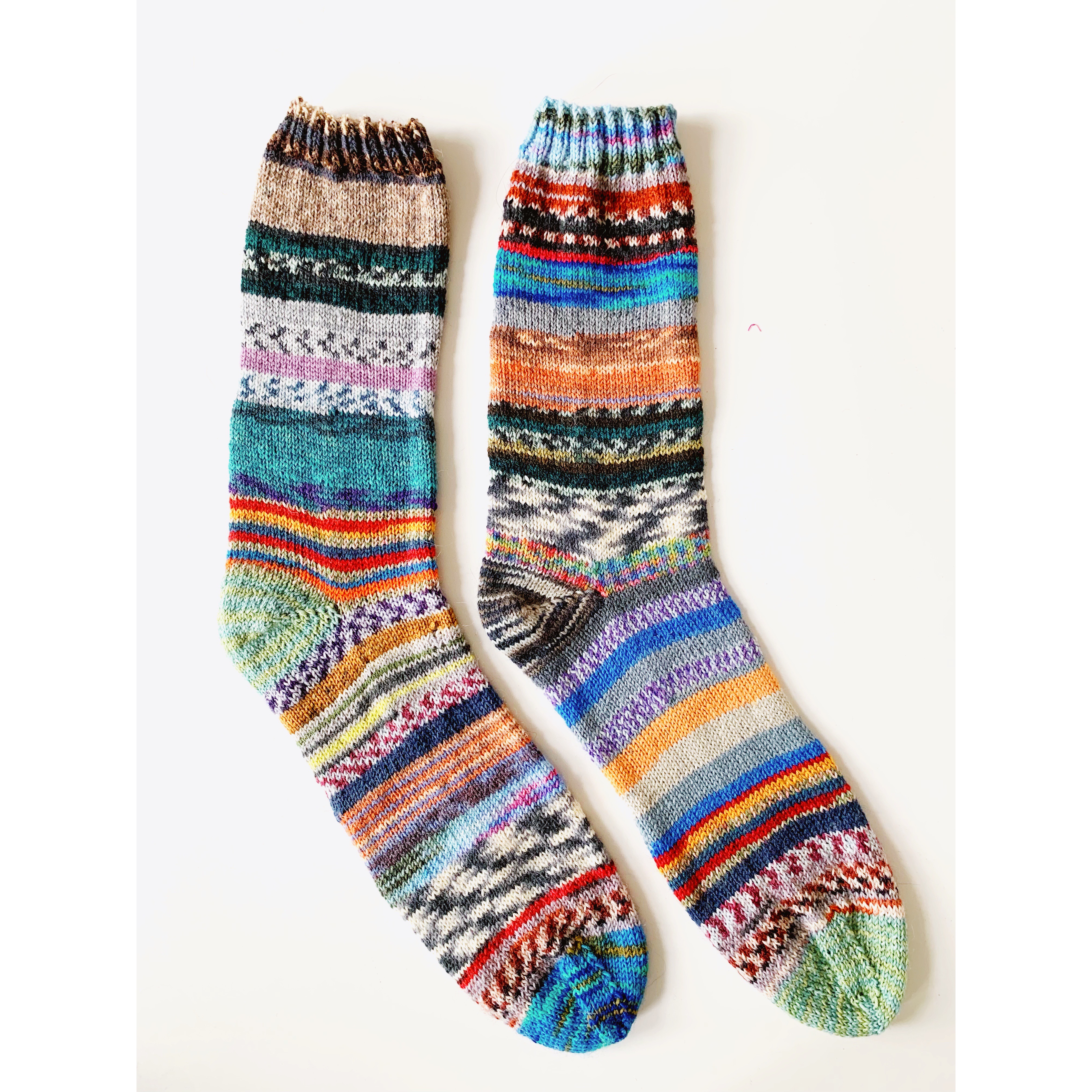
In the meantime, a stitch here and a stitch there I managed to finish a pair of scrappy socks for the husband.

Nothing new, same old pattern. Cuff down. 2.5mm needs and a lot of change of colours, although probably less than it seems because those self changing yarns are nothing short of miracolous. I just love how the same leftover balls combined in a different order give you such a different result every time.

A very satisfying project.

However…

I must go back knitting the sweater I was knitting earlier, before I totally forget where I was when I stopped and have to start again. Which would be very annoying.

Today I’m having my first MRI scan… I’m a bit nervous… I’m not claustrophobic but the thought of being stuck in a noisy metal tube for one an hour doesn’t exactly fill me with joy and anticipation. Any tips?

(by the way… nothing serious, just a dodgy shoulder and neck,)

Something a little different… a little bit poetry, a little bit music… I was introduced to Kate Tempest during a lecture this week on poetry slams and music poetry… enlightening and inspiring…

Kate Tempest is an English spoken word performer, poet, recording artist, novelist and playwright. In 2013, she won the Ted Hughes Award for her work Brand New Ancients.[2] She was named a Next Generation Poet by the Poetry Book Society,[3] a once-a-decade accolade. Her albums Everybody Down[2]and Let Them Eat Chaos have been nominated for the Mercury Music Prize.[4] The latter’s accompanying poetry book (also titled Let Them Eat Chaos) was nominated for the Costa Book of the Year in the Poetry Category.[5] Her debut novel The Bricks That Built the Houses was a Sunday Times bestseller and won the 2017 Books Are My Bag Readers Award for Breakthrough Author. She was nominated as Best Female Solo Performer at the 2018 Brit Awards.[6]

She doesn’t pull any punched and I love that.

If Beale Street Could talk (by James Baldwin)

  1. yes I’m still plowing along with my challenge, although to be fair I’ve been slightly sidetracked by all the other reading I have to do/want to do…
  2. Why did nobody ever told me about James Baldwin before??
  3. I really dislike movie cover tie-ins for books. REALLY DISLIKE THEM.

I’ve been sitting in front of my screen for a while because I want to do this book justice. I haven’t seen the movie and I’m not sure I want to right now… maybe in a while, when the rawness of the book has died down. I have to say that rarely movies manage to maintain the subtlety and depth of the written words and I don’t want the memory of this novel to be spoilt.

If I were to choose just one word to describe this book I’d say ‘raw’. Baldwin doesn’t pull any punches… he can be incredibly tender and delicate, but he’s equally as direct and hard and truthful and intense, and honest.

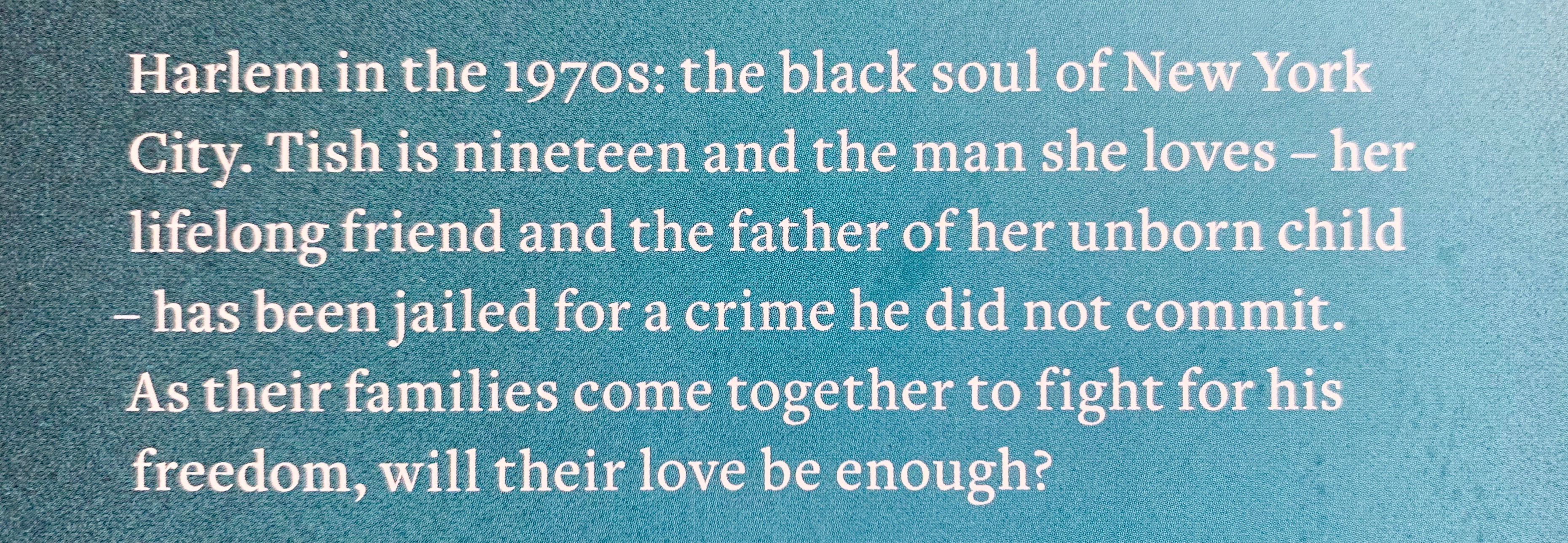
It’s a love story, it’s a survival story, it’s about growing up in Harlem in the ’70, it’s about being black and not been treated fairly. It’s about institutionalised racism and the search for justice, and it’s about humanity at its best and its worst.

Baldwin’s writing is about the injustices put upon black lives decades earlier than #blacklivesmatter movement. His writings is ‘raw’ because he’s determined not to hide anything, he wants everyone to see how unfair society is, how racist, how unequal. BUT he also wants you to see the love and the passion and the vulnerability.

Baldwin too had grown up in Harlem, but moved to France at the age of 24 (in 1948) to escape the prejudice and racism of America at the time. He says he didn’t want to be seen only ‘an Afrian American writer’, and even though he lived in exile Americans went to him: famous artists like Miles Davis, Josephine Baker, Sidney Poitier, Harry Belafonte, Ray Charles, and many more made pilgrimages to see him. He was friend with Jean Paul Sartre, Nina Simone, Allen Ginsburg and so many others… and on his death in 1987, Toni Morrison published a eulogy, published in the New York Times:

You knew, didn’t you, how I needed your language and the mind that formed it? How I relied on your fierce courage to tame wildernesses for me? How strengthened I was by the certainty that came from knowing you would never hurt me? You knew, didn’t you, how I loved your love? You knew. This then is no calamity. No. This is jubilee. ‘Our crown,’ you said, ‘has already been bought and paid for. All we have to do,’ you said, ‘is wear it.’

This book is not a comfortable read.

But it should be read..