I Have Been a Stranger in a Strange Land (Rita Dove)
Life’s spell is so exquisite, everything conspires to break it. Emily Dickinson
It wasn’t bliss. What was bliss but the ordinary life? She’d spend hours in patter, moving through whole days touching, sniffing, tasting . . . exquisite housekeeping in a charmed world. And yet there was always
more of the same, all that happiness, the aimless Being There. So she wandered for a while, bush to arbor, lingered to look through a pond’s restive mirror. He was off cataloging the universe, probably, pretending he could organize what was clearly someone else’s chaos.
That’s when she found the tree, the dark, crabbed branches bearing up such speechless bounty, she knew without being told this was forbidden. It wasn’t a question of ownership— who could lay claim to such maddening perfection?
And there was no voice in her head, no whispered intelligence lurking in the leaves—just an ache that grew until she knew she’d already lost everything except desire, the red heft of it warming her outstretched palm.
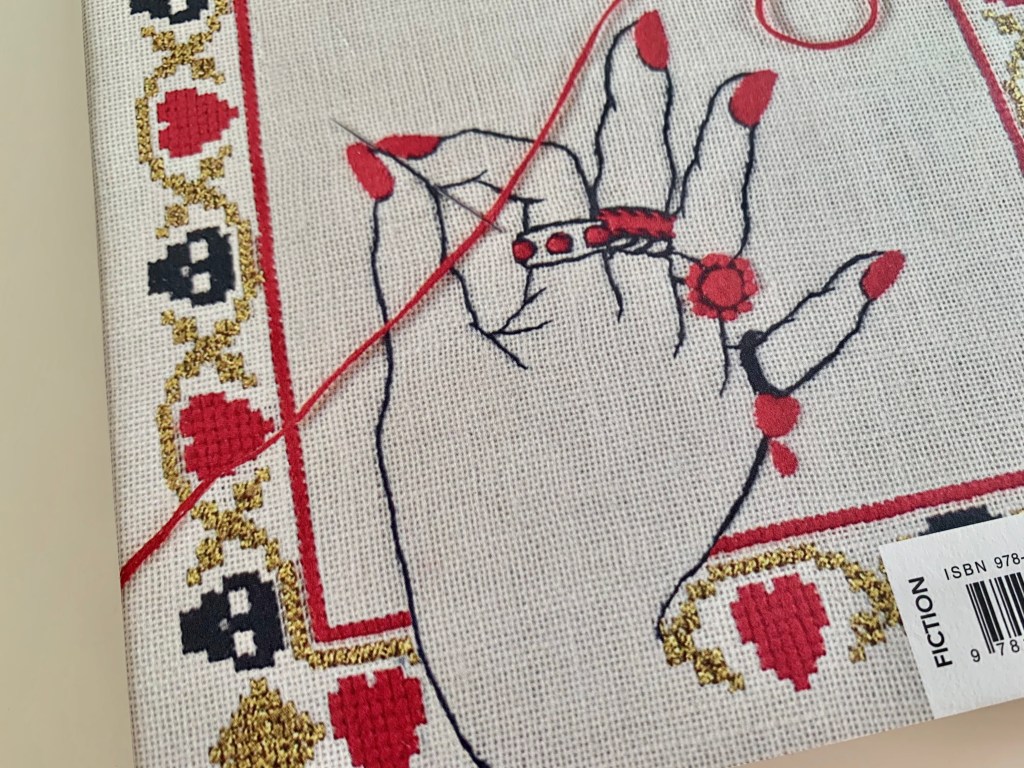
You have to admit… the cover of this book is rather splendid, isn’t it?
And so is the book.
Shimi and Beryl are both over ninety. She’s worried about losing her memory, ex English teacher proud of her vocabulary is trying to write a memoir of all the men in her life, while despairing over her two sons, MPs for opposing political parties, she embroiders morbid samplers and is scathing of her two carers. Shimi instead, remembers everything, even the things he’d rather forget, whiles he dodges prowling widows and bladder accidents.
They meet. They fall in love. And in the short time they have left the manage to find something to keep them going, something that can heal the wounds of the past.
BUT, before you make up your mind about the whole love story between old people just remember this… it is a funny book. And I don’t like funny books, but this is genius. It’s not ‘slip on a banana skin’ funny, it’s clever, subtle, tender funny. It is beautifully observed as only Howard Jacobson can, full of little details that make it real and poignant.
You’ll really grow fond of the two of them, you’ll lose yourself in the description of North London life, the streets, its people and it’ll stay with you long after you turn the last page.
The structure is a little bit complicated, with alternate chapter told by each the two character till the come together… stay with it. Personally I like books with a non linear time narrative but I know it’s not everyone cup of tea.
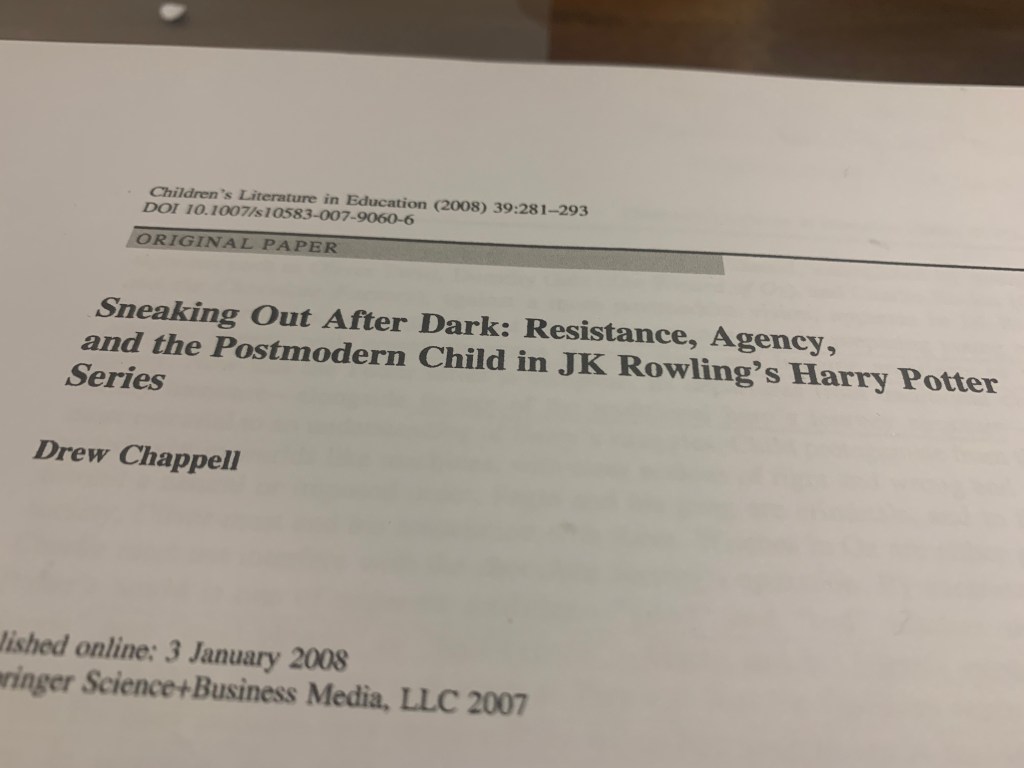
I tell you what’s going on… I’ve just finished reading this:
I wonder what do authors of novels think when someone manages to read so much into their work… does JK pat herself on the back or does she have a good laugh? I guess novels are a sign of their time and analysing them it’s a good way to analyse the state of things, they way we are, where we are… maybe? What do you think? Let’s discuss.
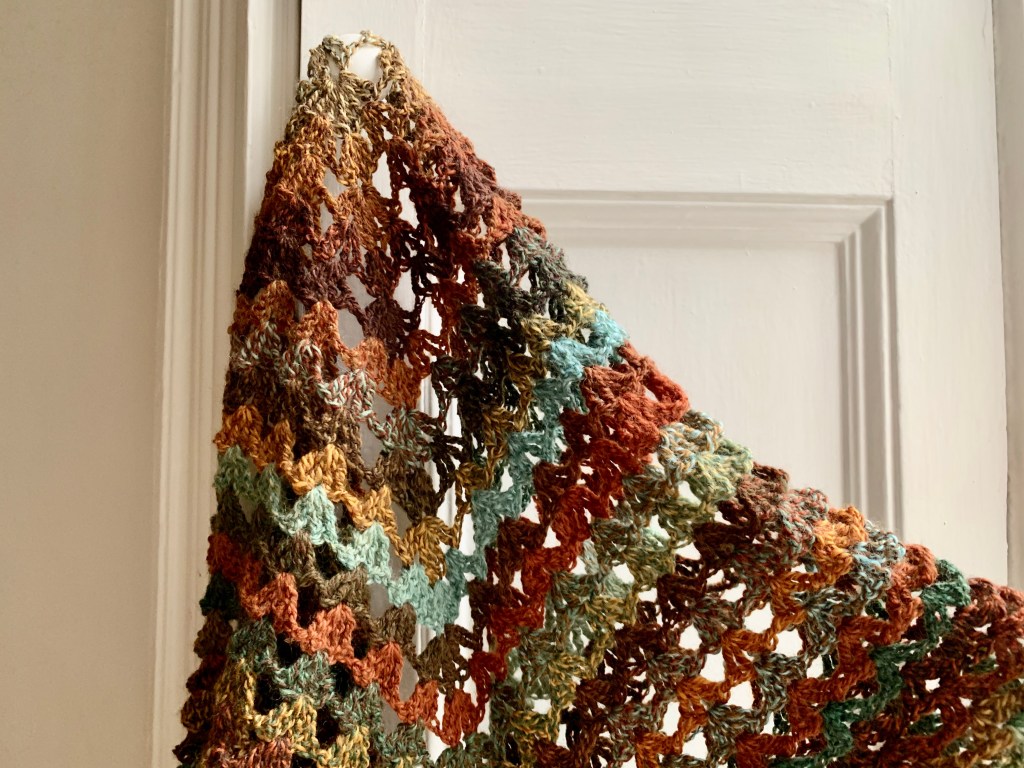
Today I was tidying away some summer jackets that had avoided the purge and at the bottom of the cupboard I found a box of handmade shawls. Do you remember when hand knitted shawls were ‘the thing’? To be honest they might still be the thing for all I know… they’re just not ‘my thing’ anymore. Who said ‘the past is a foreign country’? (Google tells me it’s LP Hartley, the opening line of ‘The go-between’, which I haven’t read and I now want to, badly).
I felt slightly guilty looking at them, they represented the past, hours spent knitting or crocheting, souvenirs from a time that I struggle to connect with now. Some of them are beautiful and I will keep them, some I might even use, after all the weather has turned really cold recently… But they also made me a little sad, like looking at photographs of old friends I haven’t seen in a while because life has moved on in a different direction.
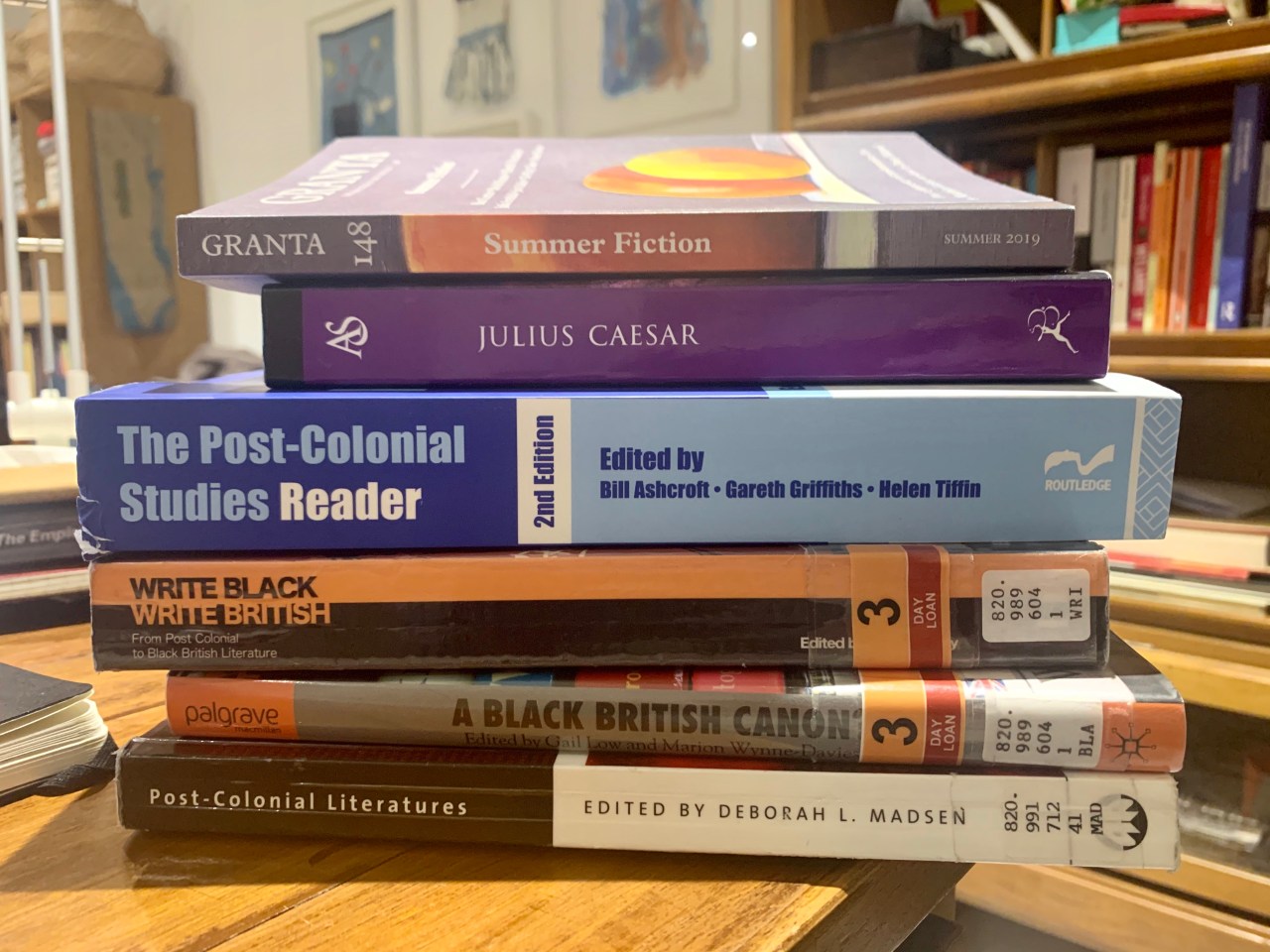
I’m rambling I know, perhaps it is only a displacement strategy to avoid reading essays from the Postcolonial Studies Reader that’s been staring at me since yesterday.
Also, have you seen the ‘Modern Love’ series on Amazon Prime? I love it. It’s like reading short stories except you can do it while ironing. (These are unique stories about the joys and tribulations of love, each inspired by a real-life personal essay from the beloved New York Times column “Modern Love.” Amazon.) Real feel good factor, and who doesn’t need a daily dose of that?
I have chocolate in my desk drawer bought for the boys advent calendar that might get eaten ahead of that. By me.
Today I bought my first Christmas presents. Small things. Probs for the stockings. But I’m stuck for more ideas for stocking fillers for teenagers, I need some serious help. And please don’t say socks or pants. I’m currently drowning in mismatched socks and pants that are all the same except they’re not but they look it and I’m constantly getting it wrong. Yes I am aware that they could be doing their own laundry but I just don’t have the energy for the fight that would require.
Mr M is watching the recording of a football match he watched live two days ago. I’m sure there are doctors for this.
The dog is snoring loudly on the sofa next to me.
Have you ever read anything by Ursula K Le Guin? Me neither, but recently I keep seeing references to her and I feel the universe is trying to tell me something.
The keyboard of this computer is a little busted… it keeps typing ‘oo’ when I need oonly oone… it’s totally annoying.
I gifted myself a subscription to ‘Granta’ magazine and I couldn’t be happier.
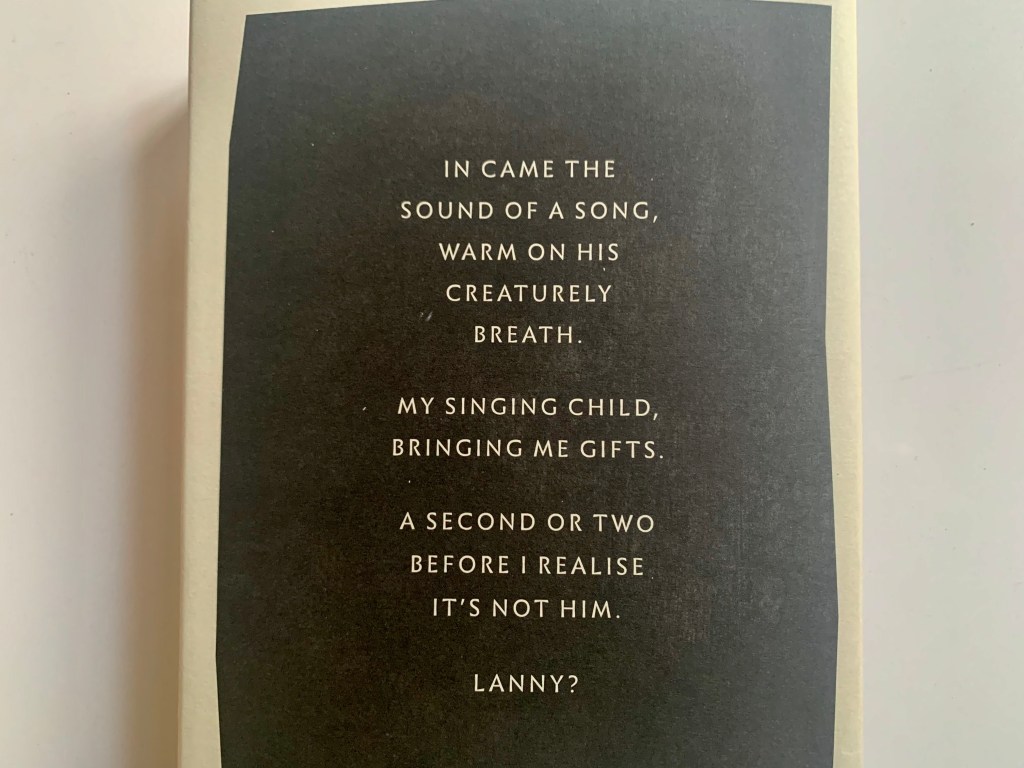
I’ve been wanting to talk about this book for a while but I know I’m going too find it really difficult to do it justice. And it deserves justice, because it’s one of the most innovative and poignant and clever and beautiful book I’ve read this year.
The Guardian has a brilliant review
Lanny is a gloriously idiosyncratic little boy, busy building dens, talking to trees, enchanting and baffling his parents; getting on with the endlessly interesting stuff of life in an “ordinary home-county place”, a rural village in commuting distance of London. We see him, and we miss him, through the eyes of his rapturously devoted mother, a father who can’t feel the same closeness, an ageing artist who cherishes Lanny’s buoyant creativity, and a whole company of local people whose voices rise and fall in an “English symphony”. We also watch Lanny from the perspective of Dead Papa Toothwort, an ancient spirit who stirs in the ground and has seen all life in this place.
“a joyously stirred cauldron of words”… it continuous.. and it’s just perfect!
The book is about the past and the future and what we’ve lost and creativity and magic and being different and relationship and nature… but it’s mostly about love. And the language is rich and alive.
Stunning. Imaginative. Extravagant. Poetic. Old as time. Contemporary.
We get to know Lanny and his family and then he goes missing… but I’m not going to spoil the ending for you… please read it. Sit in your most comfortable chair, a blanket and a cup of tea if you wish, or under a tree in the sun and let the words swallow you up and get lost in them.
You will not regret it.
Waterstones’s have a beautiful special edition if you need a present for someone.
Max Porter also wrote ‘Grief is the thing with feather’, another total gem. I’m a huge admirer of his work. At the Cheltenham Festival of Literature he was in the audience of Anthony Anaxagorou and I had a total fangirl moment. Mercifully he was very gracious about my rambling.
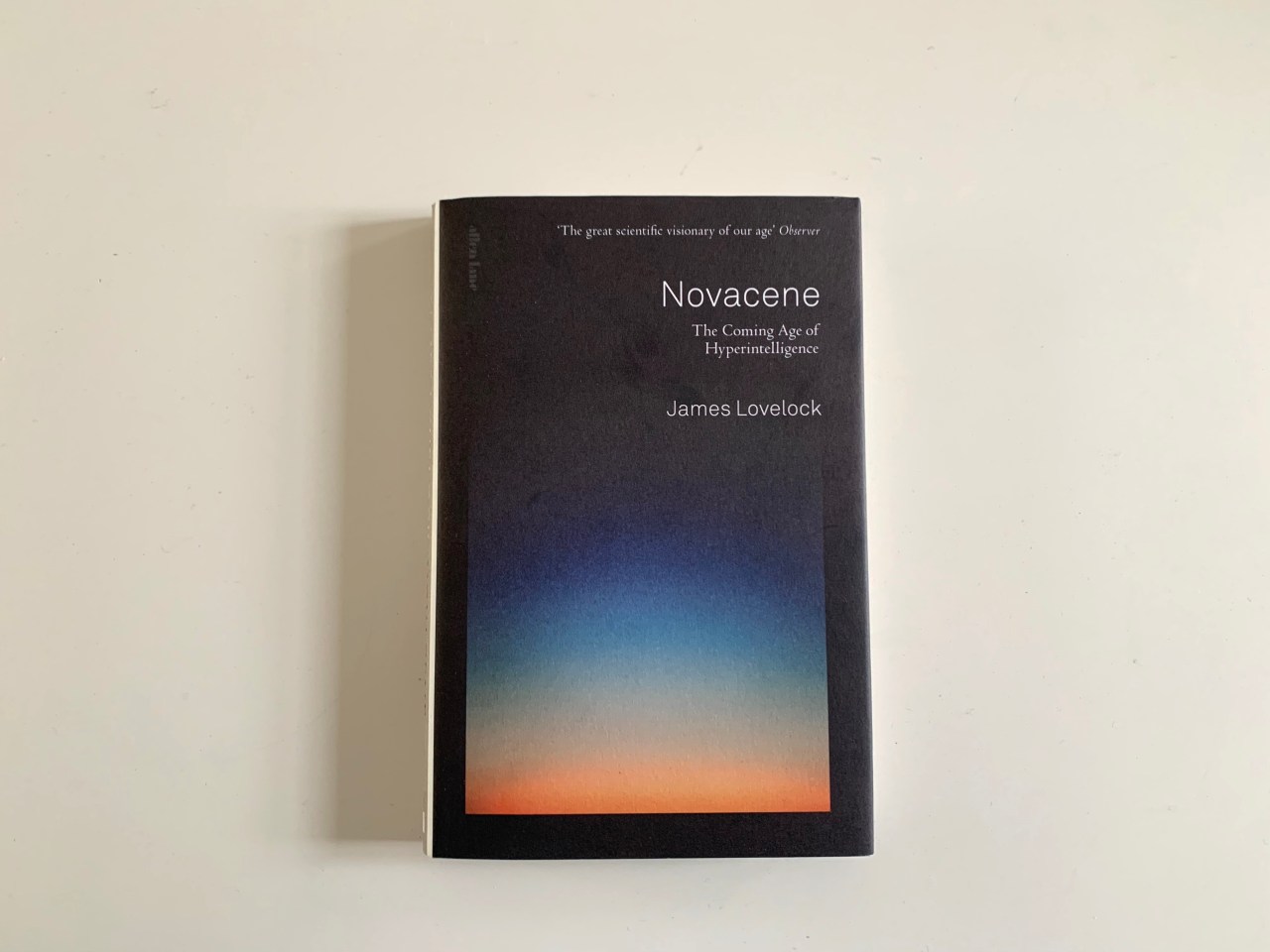
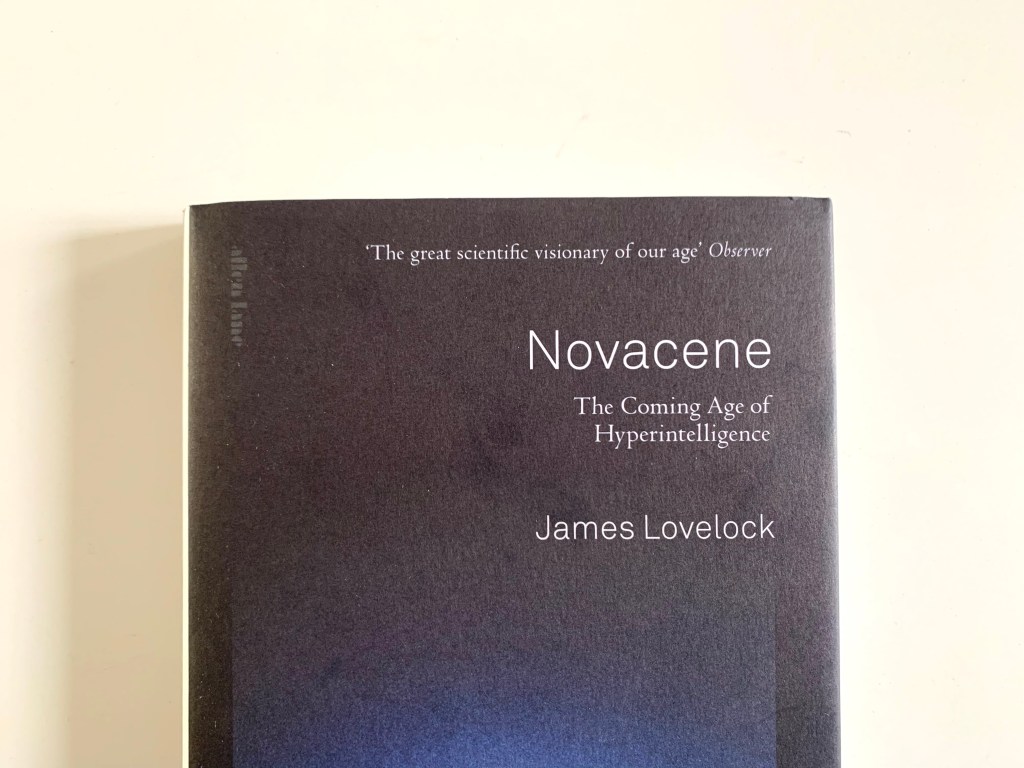
I am not really sure of what made me buy this book. The cover is beautiful, yes, but I’m not that shallow. It just ‘called me’ and I simply answered.
I was intrigued by the byline ‘the coming of age of hyperintelligence’, I’ve been struggling how to make sense of getting older, of the meaning of life (ha!) and struggling to put into context the ‘computer’ age we’re finding ourselves in… is it good? or bad? is it progress? or the beginning of the end? People seem to be split into two opposing camp on this regard and I find myself firmly on the fence; I remember a world that functioned well enough without it, the slower pace, more human contact but let’s be honest, our life is much ‘easier’ now, everything at the touch of a button etc. etc.
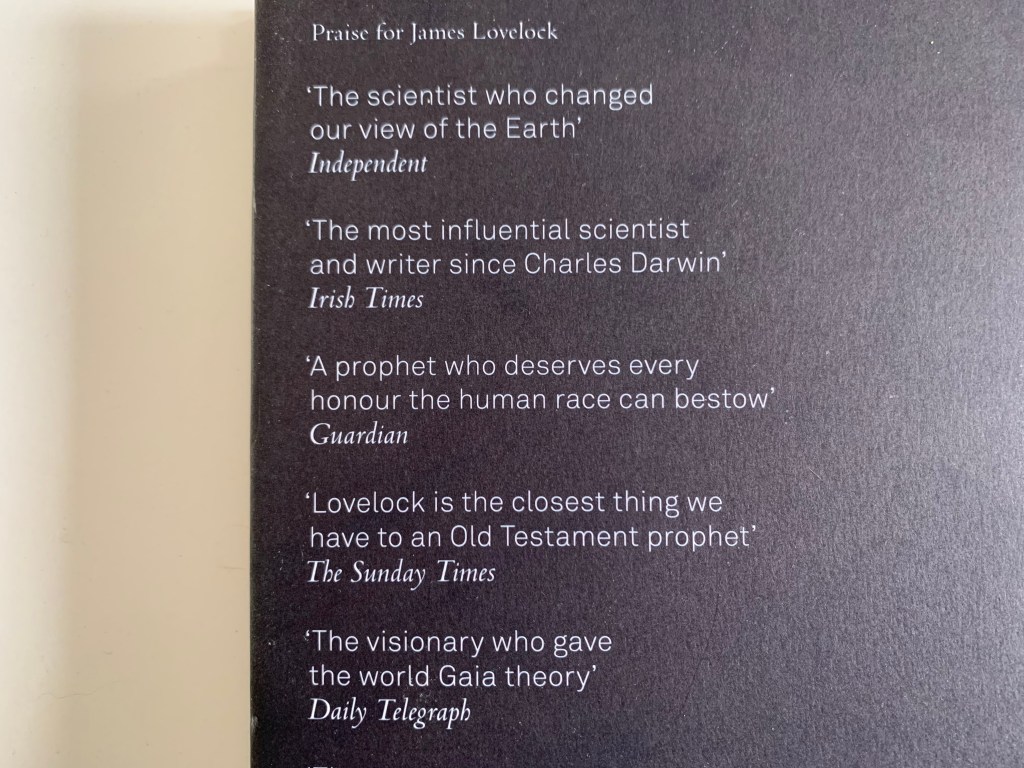
So I thought perhaps Mr Lovelock, he who gave us the genius that is the ‘Gaia theory’, might have an interesting view on our future… and of course he has. (The Gaia Theory posits that the organic and inorganic components of Planet Earth have evolved together as a single living, self-regulating system. It suggests that this living system has automatically controlled global temperature, atmospheric content, ocean salinity, and other factors, that maintains its own habitability. In a phrase, “life maintains conditions suitable for its own survival.” . It’s not airy fairy stuff, and you can read more about it here).
First of all let me say that he turned 100 this past July. One hundred – and I’m sitting here less than half his age feeling about double.
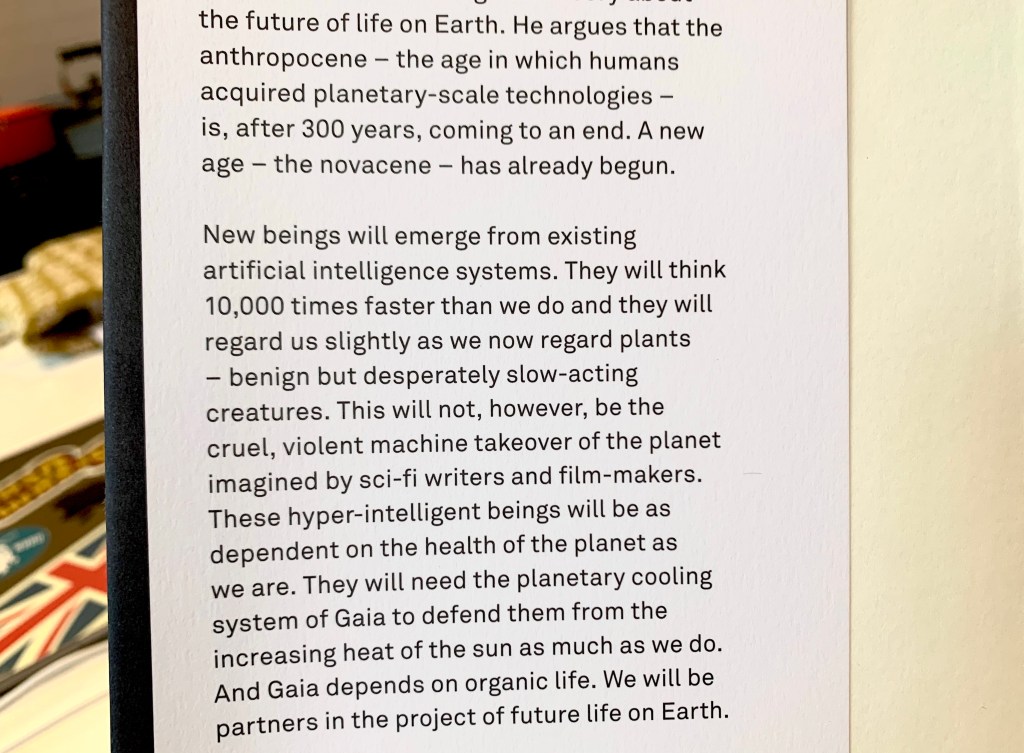
Anyway, this book gives another innovative and new theory about the future of Life on Earth. What if, and I’m giving you the quote from the sleeve because it’s beautifully explained:
There’s a lot of more in the book itself, and it’ll blow your mind. Or maybe you’ll think it’s just rubbish. It’s only a theory, after all. But I like it. A lot.
What if, truly, technology is part of evolution, not detached from it? What if we are just a little cog, just a step in the process, like the dinosaurs were… Lovelock says at the end of the book ‘we are now preparing to hand the gift of knowing on to new forms of intelligent beings. Do not be depressed by this. We have played our part. […] That what we are, we are (Tennyson). That is the wisdom of the great age, the acceptance of our importance while drawing consolation from the memories of what we did and what, with luck, we might yet do. Also, perhaps, we can hope that our contribution will not be entirely forgotten as wisdom and understanding spread outwards from the Earth to embrace the cosmos’.
It is not a depressing thought. At least I don’t see it as such… it means we’ve HAD and still have a valuable place in this mystery that is evolution… that without us, and our intelligence ‘all this’ wouldn’t have happened in this way. That has the be reassuring right?
Genius.
PS my toaster has just launched the bread onto the floor for the dog to grab it … welcome back to earth.
“Four Quartets” Part II: East Coker (by T.S. Eliot)
…
Home is where one starts from. As we grow older The world becomes stranger, the pattern more complicated Of dead and living. Not the intense moment Isolated, with no before and after, But a lifetime burning in every moment And not the lifetime of one man only But of old stones that cannot be deciphered. There is a time for the evening under starlight,
A time for the evening under lamplight (The evening with the photograph album). Love is most nearly itself When here and now cease to matter. Old men ought to be explorers Here or there does not matter We must be still and still moving Into another intensity For a further union, a deeper communion Through the dark cold and the empty desolation, The wave cry, the wind cry, the vast waters Of the petrel and the porpoise. In my end is my beginning.
Yesterday was not… but we had decided on a day out at a National Trust property and a little weather warning wasn’t going to deter us…
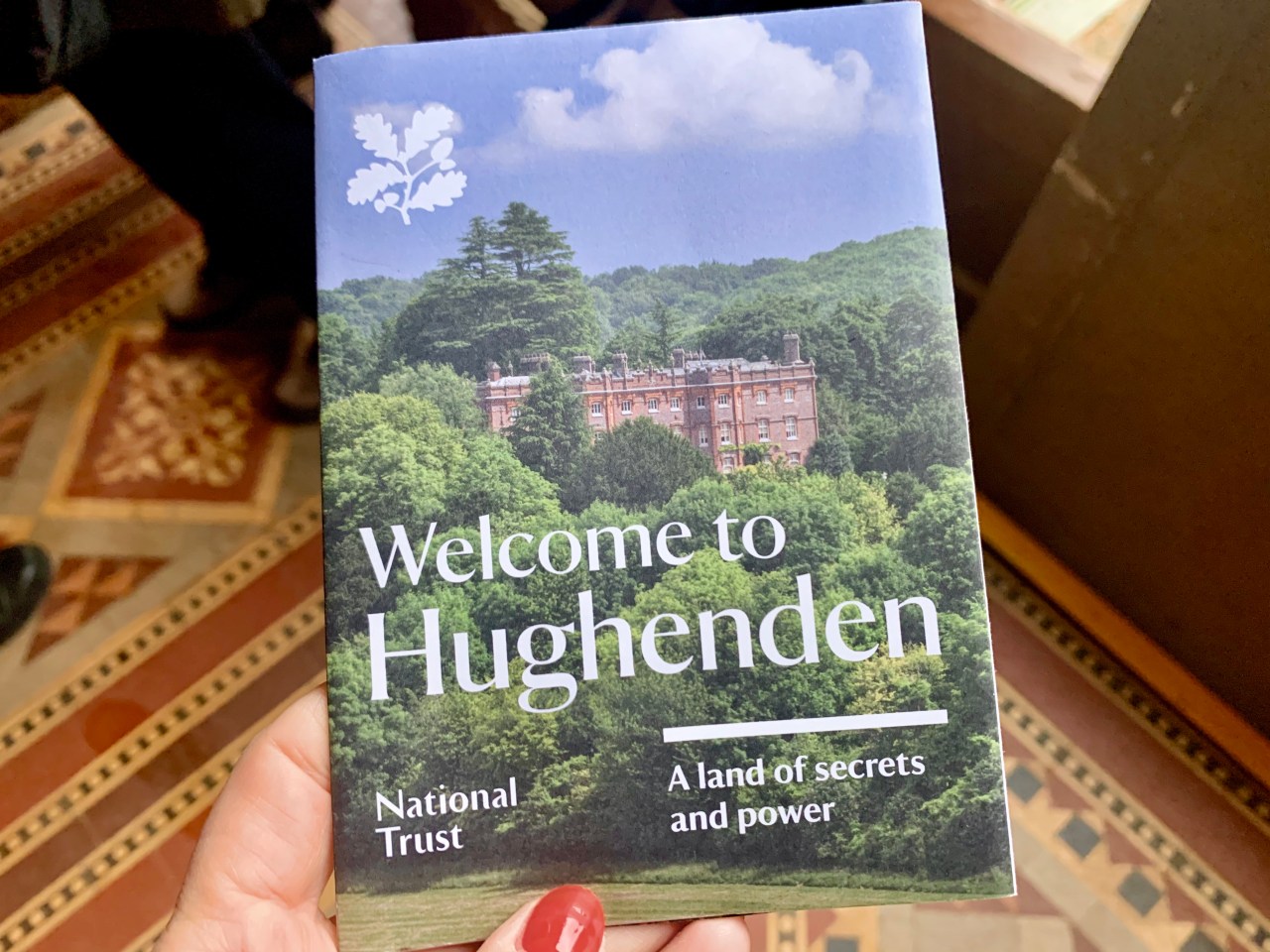
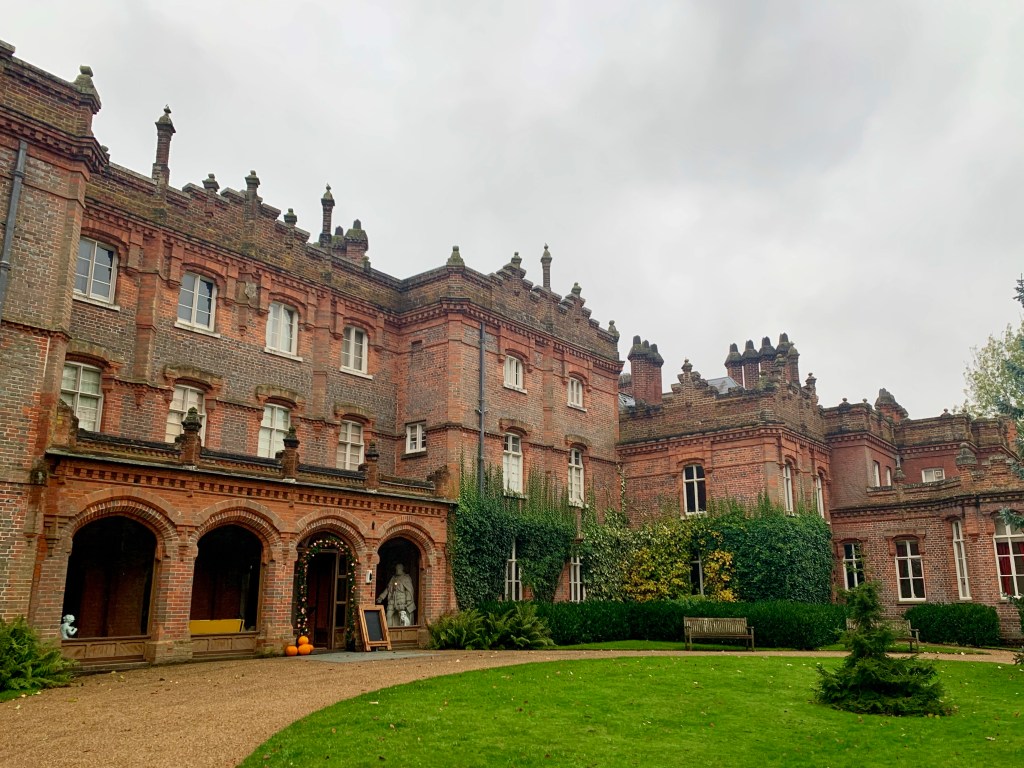
Hughenden Manor, was from 1848 to 188, the house of Benjamin D’Israeli, who was twice Prime Minister at the time of Queen Victoria. During the 2nd WW was a top secret map making site for the Air Ministry. Today it’s a wonderful home in the middle of a wonderful park the inside of which has been left virtually untouched for hundreds of years. Queen Victoria’s photographer took pictures of the house and the National Trust was able to recreate it for our benefits. A real time capsule.
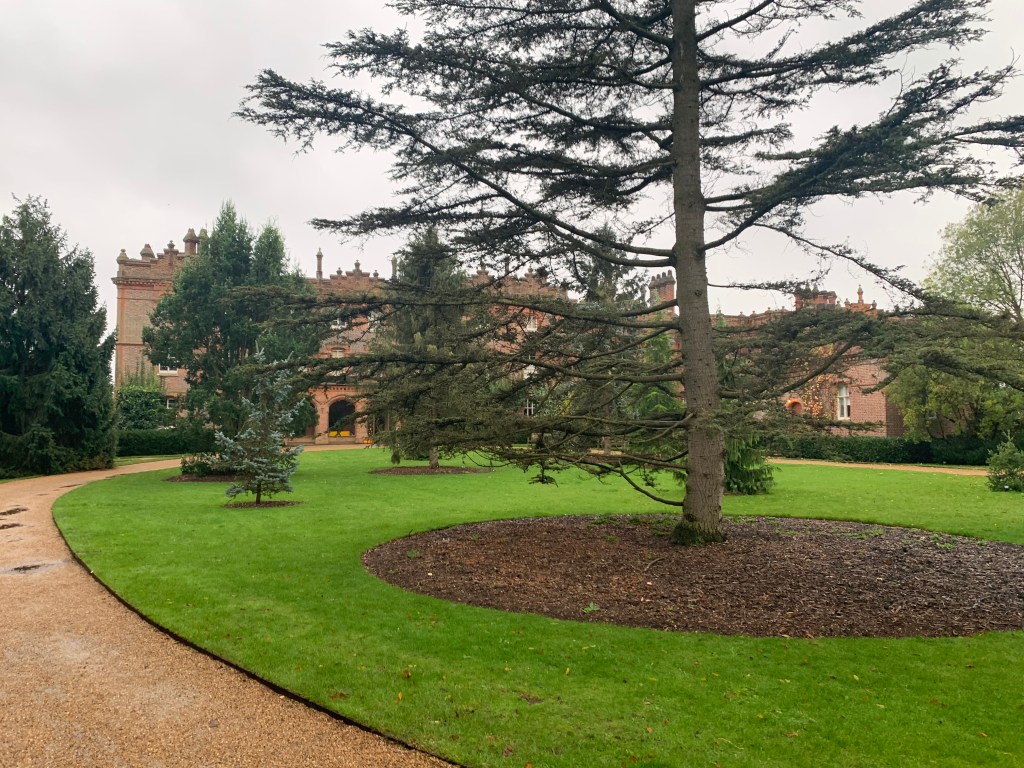
The car park is a little walk away from the house, a well signed path through a gorgeous wood…
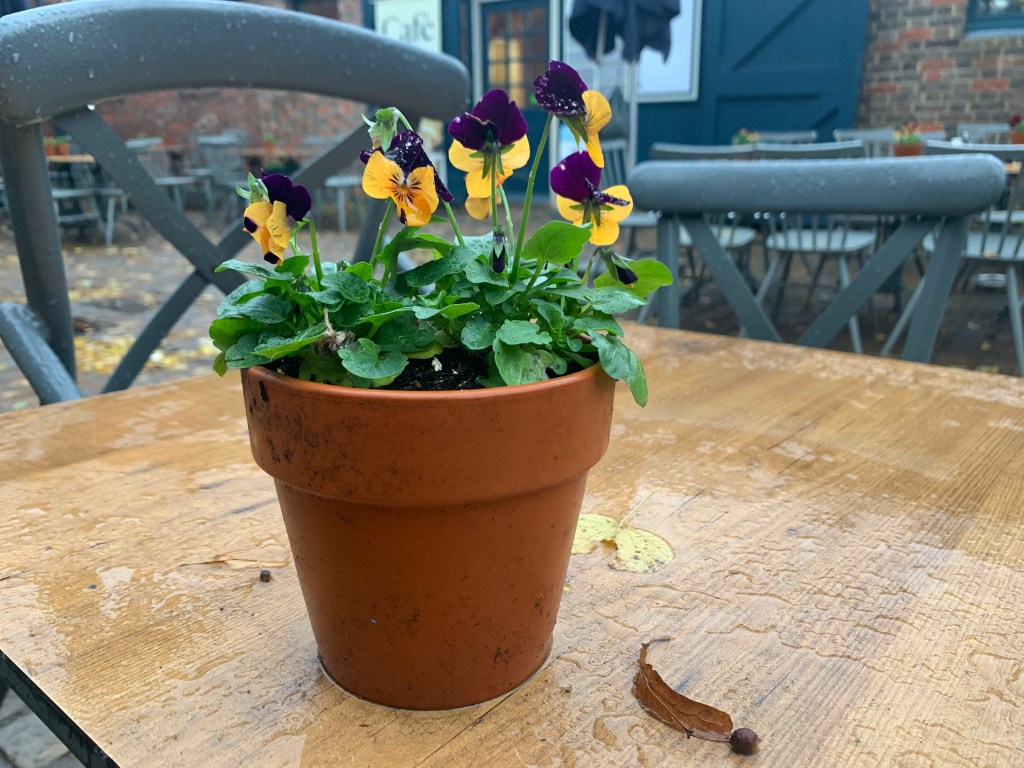
… past the cutest (and wettest coffee shop courtyard)…
And then you catch a first glimpse of the house in all its red brick glory.
Once a day there’s a free tour and it is totally worth getting there for it, they give you so much information on the house and its inhabitants… fascinating.
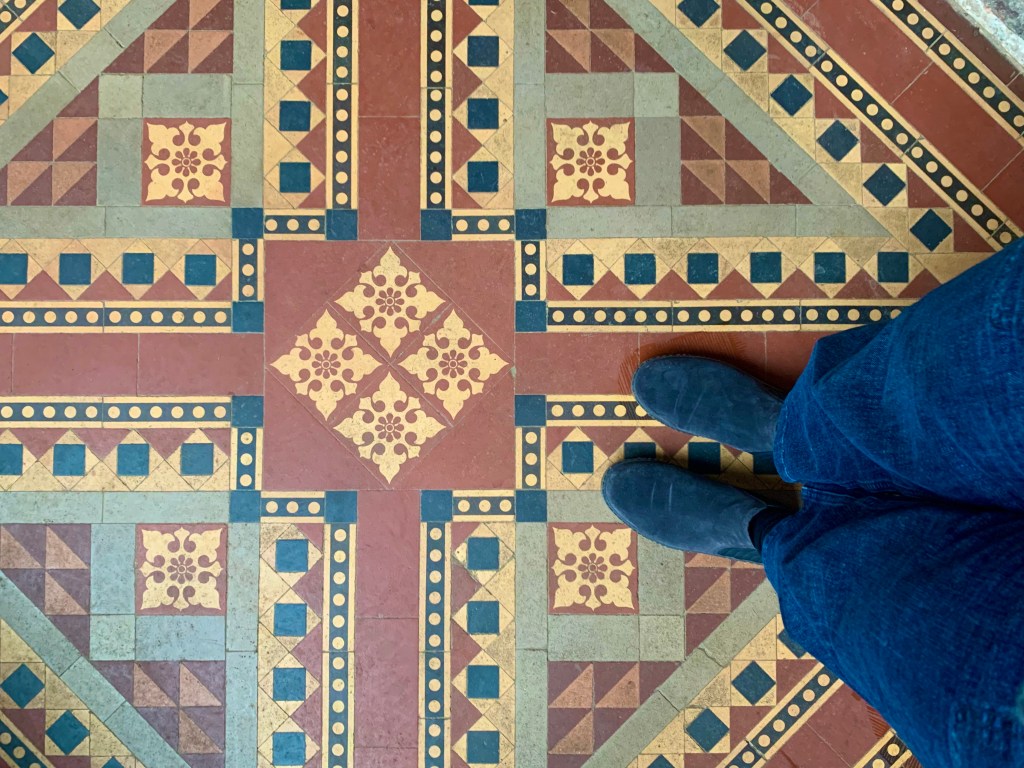
first of all let’s admire the Victorian floor… sigh…
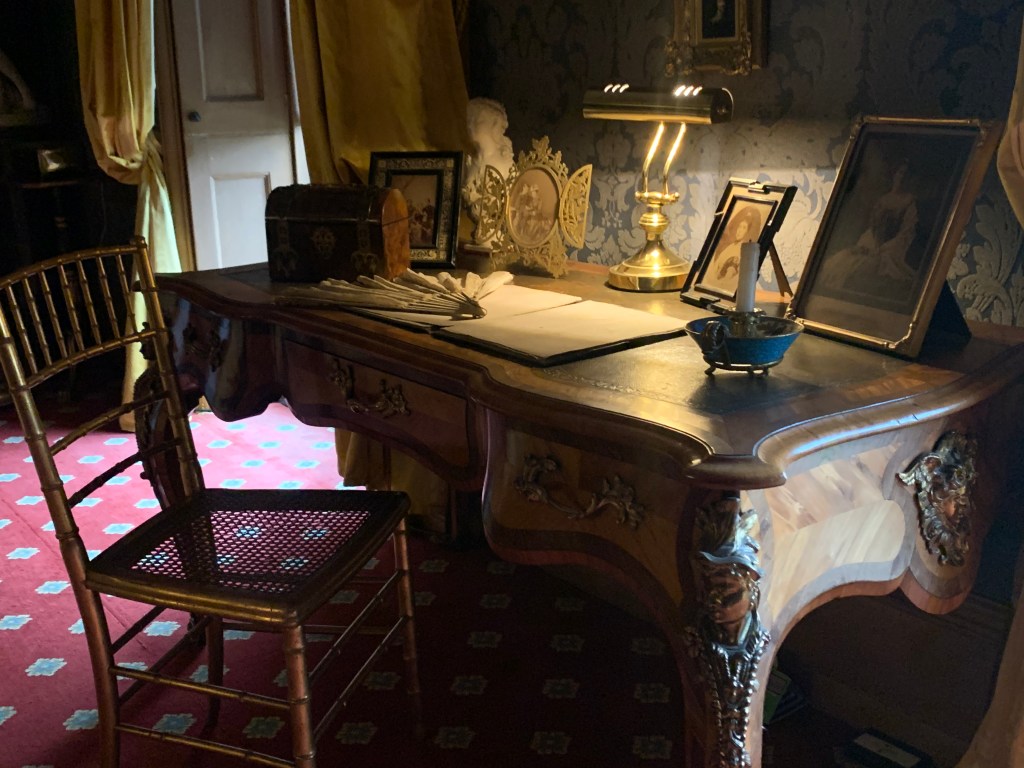
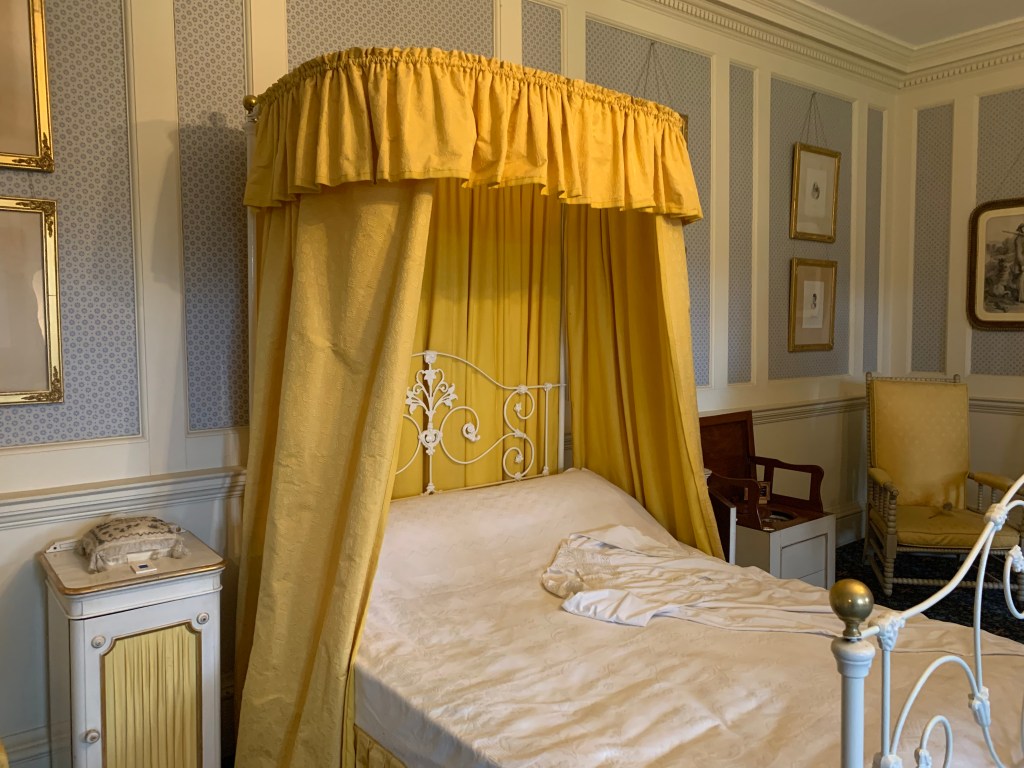
this was Mrs D’Israeli’s sitting room. She loved the gold/blue combination… lots of writing to do if you were a ‘lady’ at the time…Old ‘Dizzy’ had a big one in the library (no fiction books… how boring)the couple shared a bed, which, apparently was quite unusual in Victorian Times… and this was Dizzy’s studio. Queen Victoria wasn’t allowed to go to his funeral because he was a commoner, and had refused a state funeral, and she’s said to have sat at his chair – top left – for a whole day reminiscing ,after his death. They were great friends.
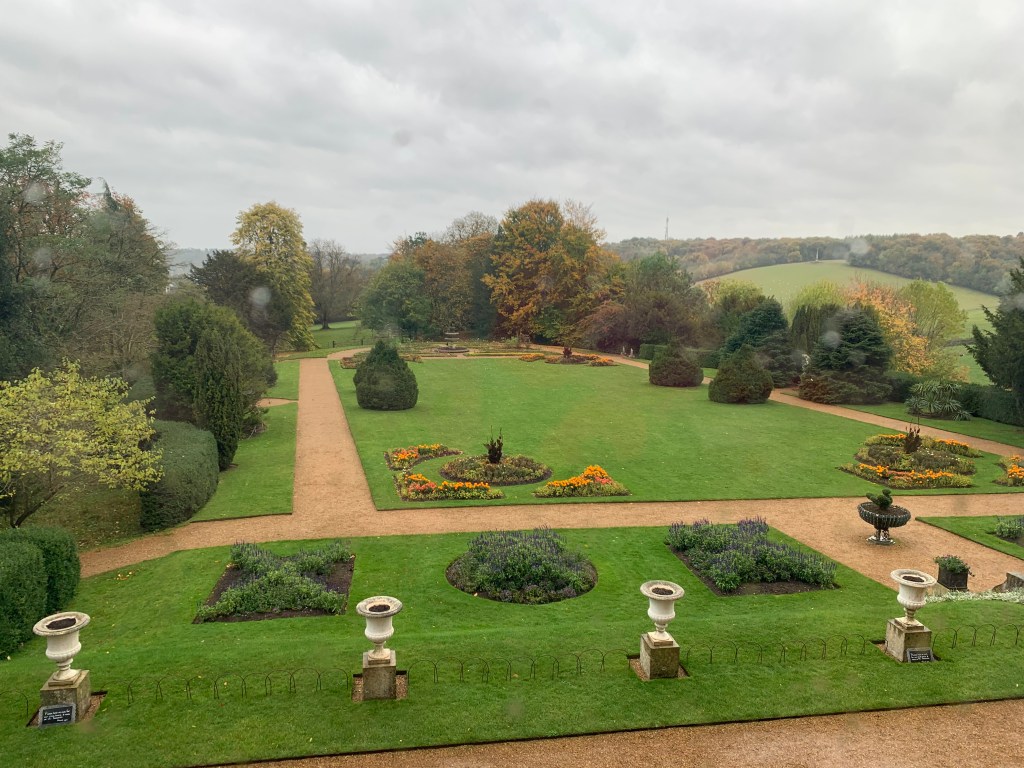
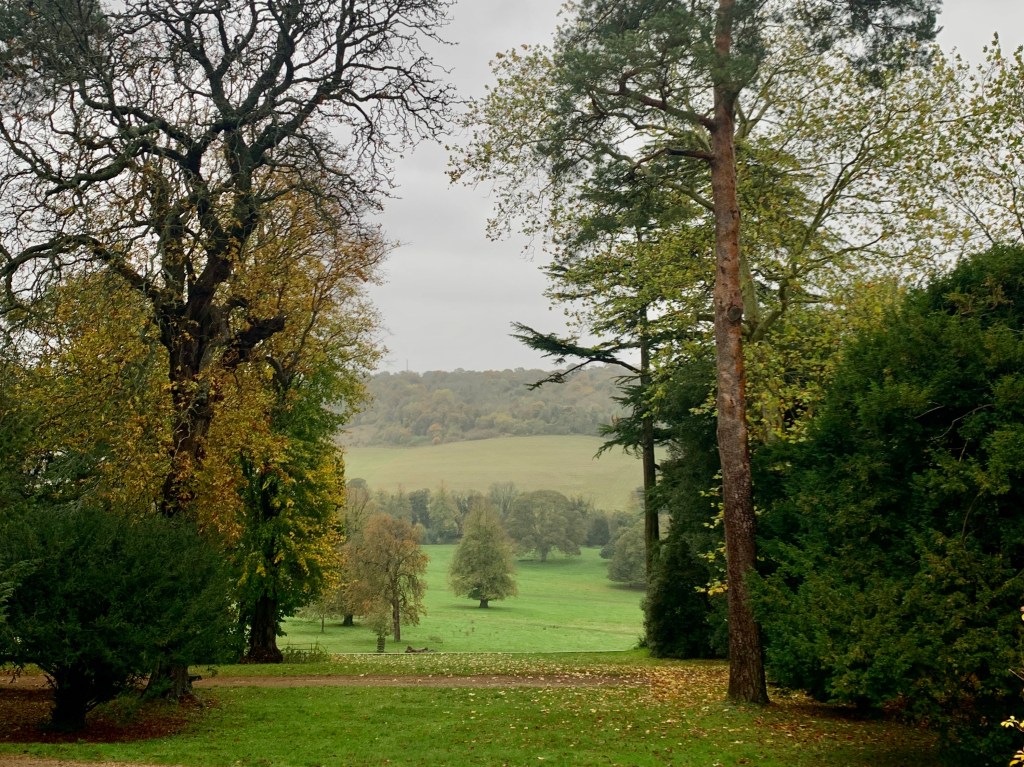
As I said the grounds looked gorgeous… but only from the window, thank you very much… it was blowing a gale and it raining cats and dogs all day…
You can find more information on this property and all the other fabulously kept by the National Trust here.











 while you're ahead...